Quiet story · 6 minutes
The Bookshop’s Last Small Task
After closing, Mara puts the shelves back in the order only she understands.
From the recurring world Bellweather Books
Begin readingAt nine o’clock Mara turned the card in the door from OPEN to CLOSED, though nobody on the wet street seemed to notice. She left the lamps burning over the history shelves and carried the day’s teacup to the narrow sink behind the travel section.
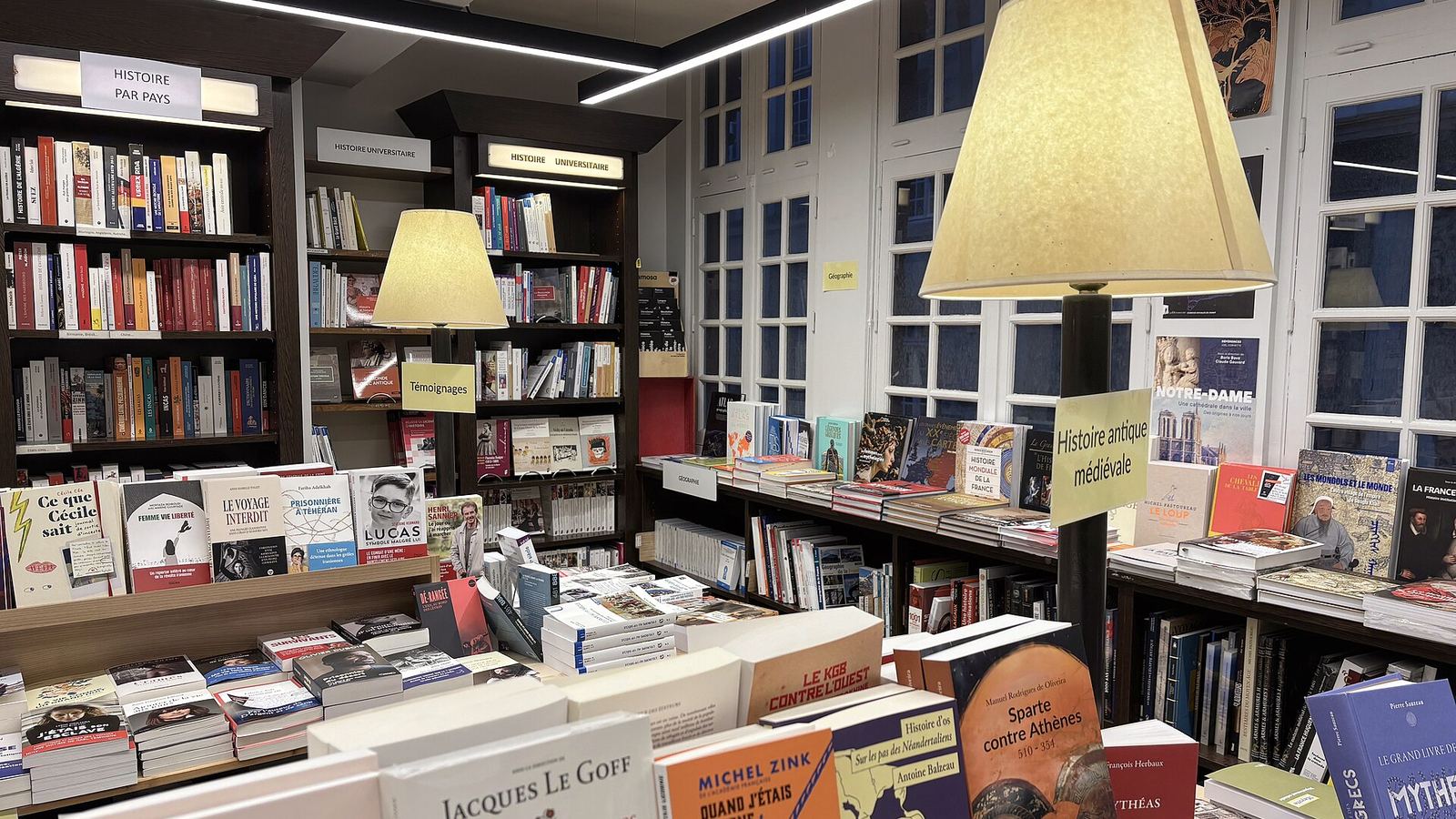
The shop had been a bookshop for longer than it had been anything else, and it showed in the floor, which sloped gently toward the window as if the books had been leaning that way for a century. The shelves were not all the same height. Some had been built for atlases and some for poetry, and where a previous owner had run out of shelves entirely, there were stairs, and books on the stairs, held back by a brass rod so that nobody would slide them into the cellar. Mara had learned the shop the way one learns a house in the dark: by the sounds each part of it made.
Every evening Bellweather Books required one last small task. Sometimes it was returning a ladder to its hook. Sometimes it was mending the paper label on a drawer. Tonight it was a stack of books that had gathered on the walnut table beside the rain-streaked window.
They had arrived there in the ordinary way. A man had carried the book about gardens halfway to the counter and then remembered that his own garden was mostly moss. A child had opened the atlas to find the island where her grandmother lived and had left it open at the wrong sea. Someone had used the thin volume about clouds to rest a cup on, briefly, and then apologised to it. Mara did not mind any of this. A bookshop in which nothing was moved would be a museum, and she preferred a shop.
Mara did not arrange them alphabetically. She placed the book about gardens beside the book about small houses, because a garden often wished to belong to a house. The atlas went near a journal of sea voyages. A thin volume about clouds belonged, for no reason she could explain, beside a cookbook written on an island.
She worked slowly, holding each book for a moment before deciding, the way one holds a pebble before choosing where on the wall to set it. The shop rewarded slowness. A book put back in a hurry was a book that would be found, weeks later, wedged upside down behind the dictionaries, looking faintly embarrassed. Rain ticked gently against the glass. A bus passed and left a soft ribbon of light across the ceiling. One by one, the books found shelves that seemed a little more prepared to hold them than they had been before.
From the back room the old clock made its small preparatory noise, the one it made before striking, and then thought better of it, as it often did at this hour. Mara had never had it repaired. A clock that considered the time before announcing it seemed right for a shop where nobody was ever asked to hurry. She straightened a row of green spines that had been leaning on one another for company and left them leaning slightly, because they looked more at ease that way.
The last was a blue clothbound book with no title on its spine. Mara carried it to the back room, where a low shelf waited beneath the clock. She placed it there without opening it. Some books were pleasant to leave unread. She switched off the nearest lamp, then the next, and let the bookshop grow quiet from the back toward the door.
The history shelves went dark last, and for a moment the whole shop was lit only by the street: the wet pavement giving back the lamplight, the rain drawing its slow lines down the window, the reflection of the walnut table now clear of books. Mara took her coat from its hook. She would be back at nine in the morning, when the floor would creak in the same places and the clock would consider the hour again. She stood a moment longer in the doorway, listening to the shop settle, then stepped out into the rain and let the door close softly behind her, so as not to wake anything.
You do not need the screen to keep this place. Close your eyes and let it continue without us.
Let the screen go darkPhotograph: Olybrius, CC BY-SA 4.0, Wikimedia Commons