Library story · 7 minutes
The Reading Room at Closing Time
Bay by bay, the green lamps go out over the long tables of a public library.
Begin readingThe reading room closed at nine, and it began closing at a quarter to, when Ada walked once down the centre aisle without saying anything at all. That was all it took. The room knew her step. Heads came up over the long tables, one after another, the way birds lift from a field, and the readers began the small unhurried business of finishing.
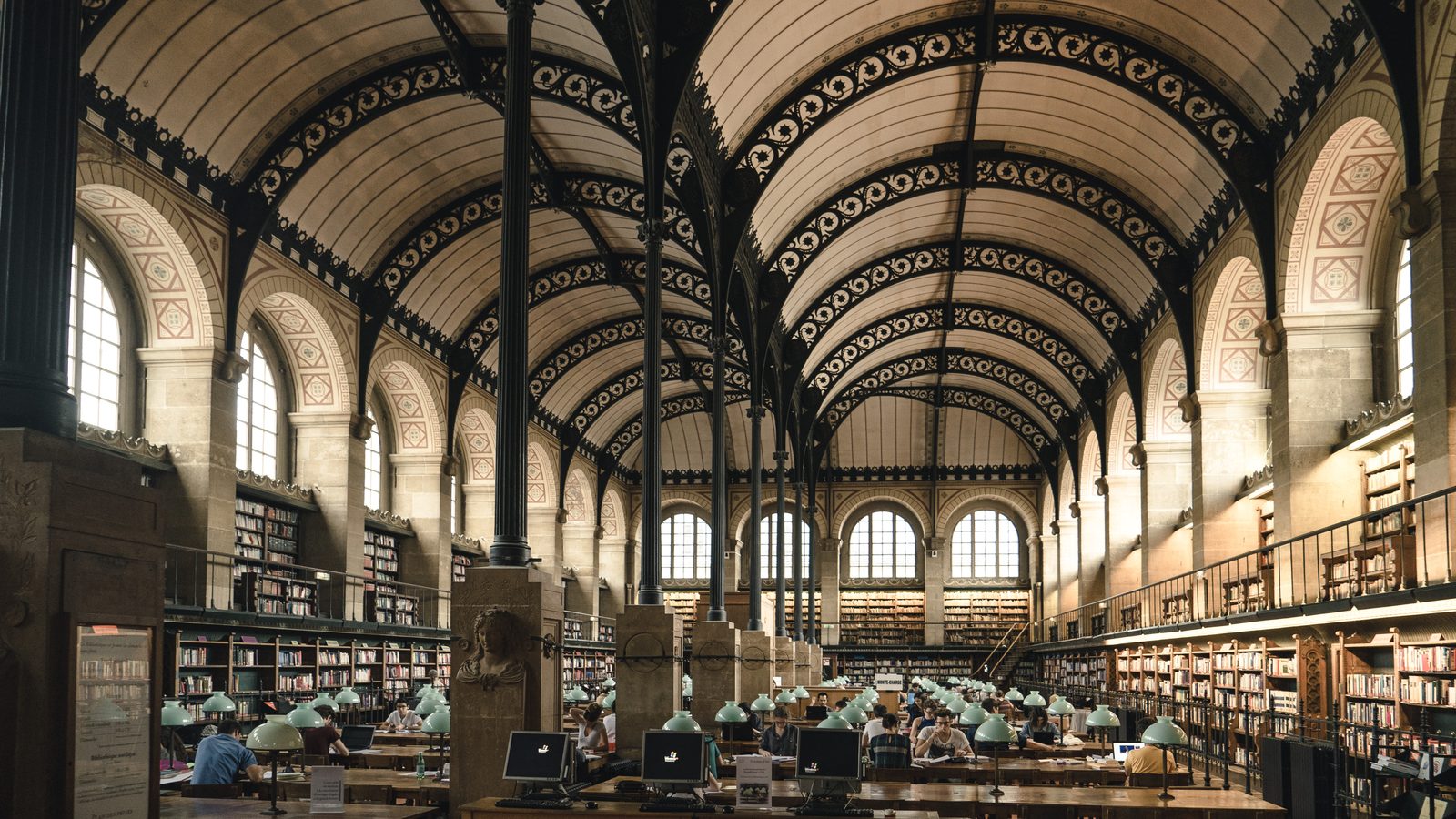
It was a tall room with a ribbed iron roof and windows high in the walls, and down its length ran the tables, eight of them, with the green-shaded lamps set along their middles two feet apart, so that by day the room was full of daylight and by night it was full of small green pools, each with a book in it. There were perhaps twenty readers left. Students, mostly, and the old man who came every evening to read the newspapers in order, and a woman in a red scarf who had been at the same table by the far window every night that week with a book about rivers.
Ada did not hurry them. The library had a bell and she had never rung it. A person deep in a page needed a moment to come up, and a person who was made to come up too fast lost the page, and it was the page, in the end, that the room was for. She went back to the desk and began her own finishing: the returns trolley, the slips, the ledger with the day’s numbers, the pencil put back in its groove.
The readers came to the desk in ones and twos with their books held against their chests and set them down and said goodnight, or did not say it and meant it anyway. The old man folded the last newspaper along its creases and put it on the rack and touched the brim of a hat he was not wearing. The woman with the river book asked whether it might be kept back for her and Ada said that it might, and wrote her name on a slip and tucked it in at the page where the river reached the sea, and put the book on the shelf behind the desk with the others that were spoken for.
Then she began on the lamps. Each table had its own switch at the end nearest the aisle, and she walked to the first table and turned it and the eight green pools along it went out together, and the table became a long dark shape with the shine of the wood along its edge. Second table. Third. The room did not become dark all at once; it became dark in bays, from the door toward the far window, and the lit part grew smaller and warmer as she went, until there were only two tables left with lamps and one reader at one of them.
It was a student, a boy of perhaps twenty, and he had fallen asleep. His head was on his folded arms on top of a book about, as far as she could see, geology, and his glasses had slipped and one hand still held a pencil. Ada stood at the end of the table and did not wake him for a moment. The room was very quiet. The high windows had gone from grey to black some time ago and now held the reflections of the last two lamps, and the roof went up into a dark she could not see the top of, and a boy was asleep in the middle of it all with a book under his cheek, which seemed to her about the best thing a library could hope to have happen in it.
She touched the table beside his elbow, not him, and he came up out of it slowly, the way she liked people to, and looked at the book and at her and understood, and smiled a little, and began to gather his things. She told him the room opened at nine. He said he knew, and that he would be back, and she believed him. He went off down the dark aisle between the dark tables with his bag over his shoulder, and she heard the door at the far end open and close, and the room was hers.
Ada turned off the seventh table and stood a while in the light of the eighth. She had done this every night for a long time and had never tired of it, this last few minutes with the room half dark and wholly still, the books on their shelves along both walls going up into the shadow, the smell of paper and floor polish and the faint cold from the windows. Somewhere in the building a door closed. A clock she could not see said the hour.
She reached for the last switch. The eight small green pools went out, and the room took the dark the way it took everything, without a sound, and she walked down the centre aisle by the light from the door, past the long tables and the tall shelves and the place where the boy had slept, and turned the key, and left the reading room to keep the night by itself, as it had been built to, with every book in it exactly where it belonged.
You do not need the screen to keep this place. Close your eyes and let it continue without us.
Let the screen go darkPhotograph: John Towner, CC0, Wikimedia Commons