Garden story · 7 minutes
The Apple Loft After the Harvest
On a small farm, the last of the harvest is laid in rows to keep while the first autumn rain begins.
Begin readingThe last of the apples came up the loft ladder in a bushel basket balanced on Bryony’s hip, the way the first had come up three weeks earlier and every basket in between. By then the farm had gone quiet below her. The hens had put themselves to bed, the yard gate was shut, and the lantern she carried hung from a nail on the beam above the shelves, where it swayed a little and then settled, as if it too had climbed a ladder and needed a moment.
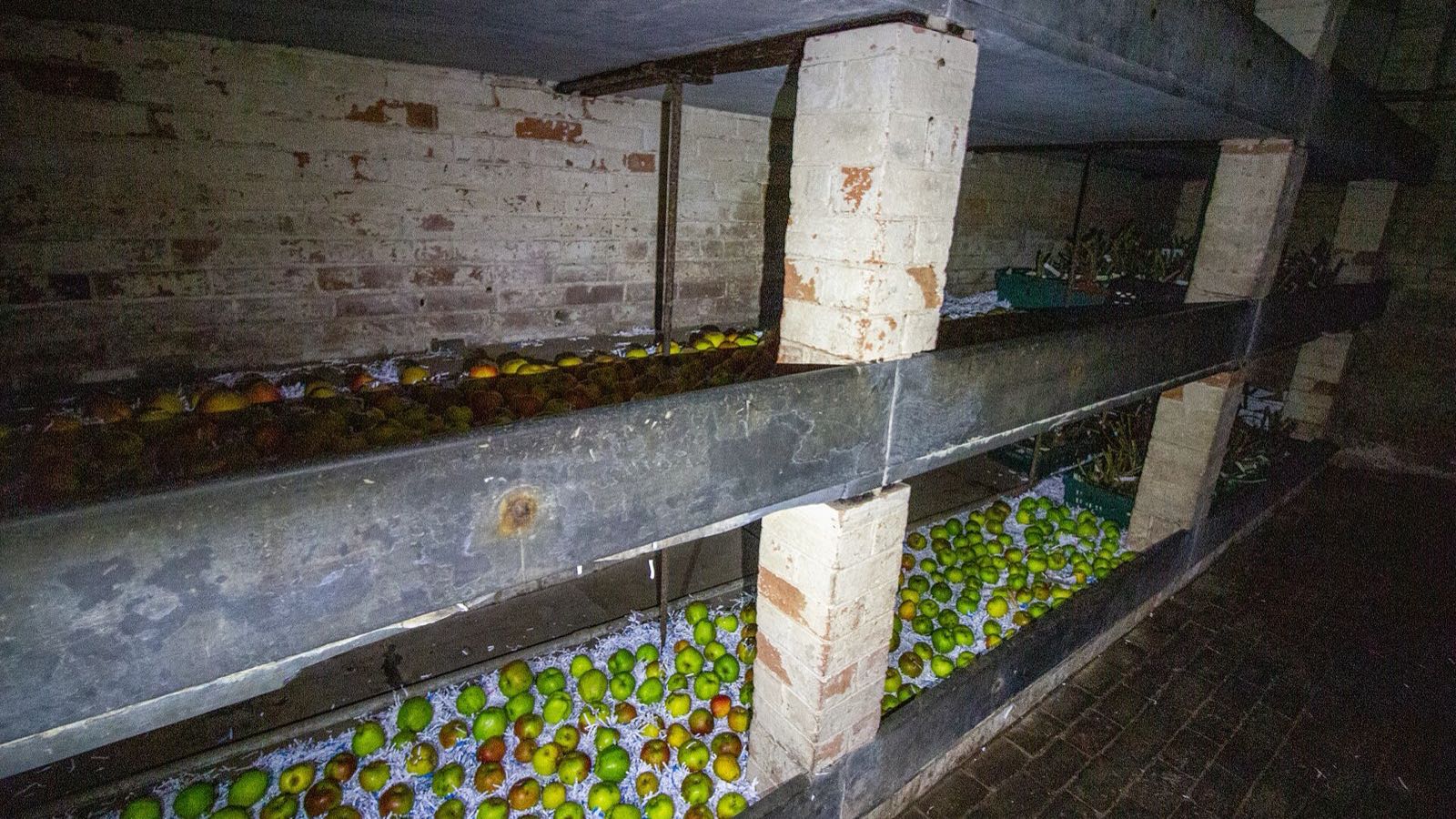
The loft ran the length of the barn under a roof of old tiles. Along both walls stood shelves of wooden slats with gaps between them the width of a finger, built by her grandfather for exactly this purpose and for nothing else, so that in summer they stood empty and looked faintly disappointed, like a table laid for a dinner that was months away. Now they were nearly full. Row upon row of apples lay on the slats, none touching its neighbour, each with a little air on every side.
That was the whole rule of the loft, and she had learned it as a girl: an apple kept best when it was left alone. One bruise, one soft place pressed against another, and by midwinter there would be a shelf of brown regret. So she laid them out one at a time, stalk up, and turned each a little in her palm before she let it go, looking for the small dark mark that meant it belonged in the kitchen rather than up here.
The varieties had their own shelves and their own manners. The russets went at the far end, rough and golden as old leather, and smelled of pears when she held them close. The Blenheim Oranges were large and lopsided and sat wherever they were put with an air of having chosen the spot themselves. There were Ashmead’s Kernels, which tasted of almost nothing in September and of honey and nuts by January, and which she had long ago stopped trying to hurry. The Norfolk Beefings were hard as stones and would stay that way until spring, when someone would bake them slowly in a low oven and remember why the tree had been planted.
The loft smelled of all of them together, a smell that had no single name. It was sweet and a little winey and had the dry note of the slats in it, and the dust of hay from the bales stacked at the far end, and the faint warm oil of the lantern. Bryony thought it was the best smell of the year, and suspected that the year knew this, and had arranged to save it until the work was nearly done.
She was halfway along the last shelf when the rain began. It came without any announcement, a few soft taps on the tiles directly over her head and then a few more farther along, as though someone were walking slowly across the roof testing which ones were loose. Then it settled into itself. The sound filled the loft from end to end, steady and close, the first proper autumn rain after a long dry month, and below in the yard she heard the gutter begin to talk to the water butt. She went on laying apples. There was nothing about rain on a roof that asked anything of a person underneath it.
The basket emptied slowly. Near the bottom she found three apples with small dark marks and set them on the windowsill to carry down for the morning, and one perfect russet that had somehow escaped the others, which she placed at the very end of the very last row, with a little more space around it than was strictly necessary. She stood back with the lantern and looked along the shelves. In the moving light the apples were red and gold and green, a long quiet library of them, and not one was touching another.
There was nothing more to do for them now except leave them be. They would keep through the dark months on their own, slowly changing in the cold, the russets growing sweeter, the Kernels finding their honey, without anyone needing to watch. In December she would climb up for a basket of them; in February she would climb up again and find them still there, a little wrinkled, a little wiser. Bryony unhooked the lantern, took the three marked apples from the sill, and went down the ladder one rung at a time. At the bottom she turned the lamp low and pulled the loft hatch closed behind her, and the rain went on over the tiles, and the apples lay in their rows in the dark, keeping.
You do not need the screen to keep this place. Close your eyes and let it continue without us.
Let the screen go darkPhotograph: Mike Peel, CC BY-SA 4.0, Wikimedia Commons