Harbor story · 6 minutes
The Warmest Window in Port Sola
From the harbor, one lit room becomes a destination that never needs to be reached.
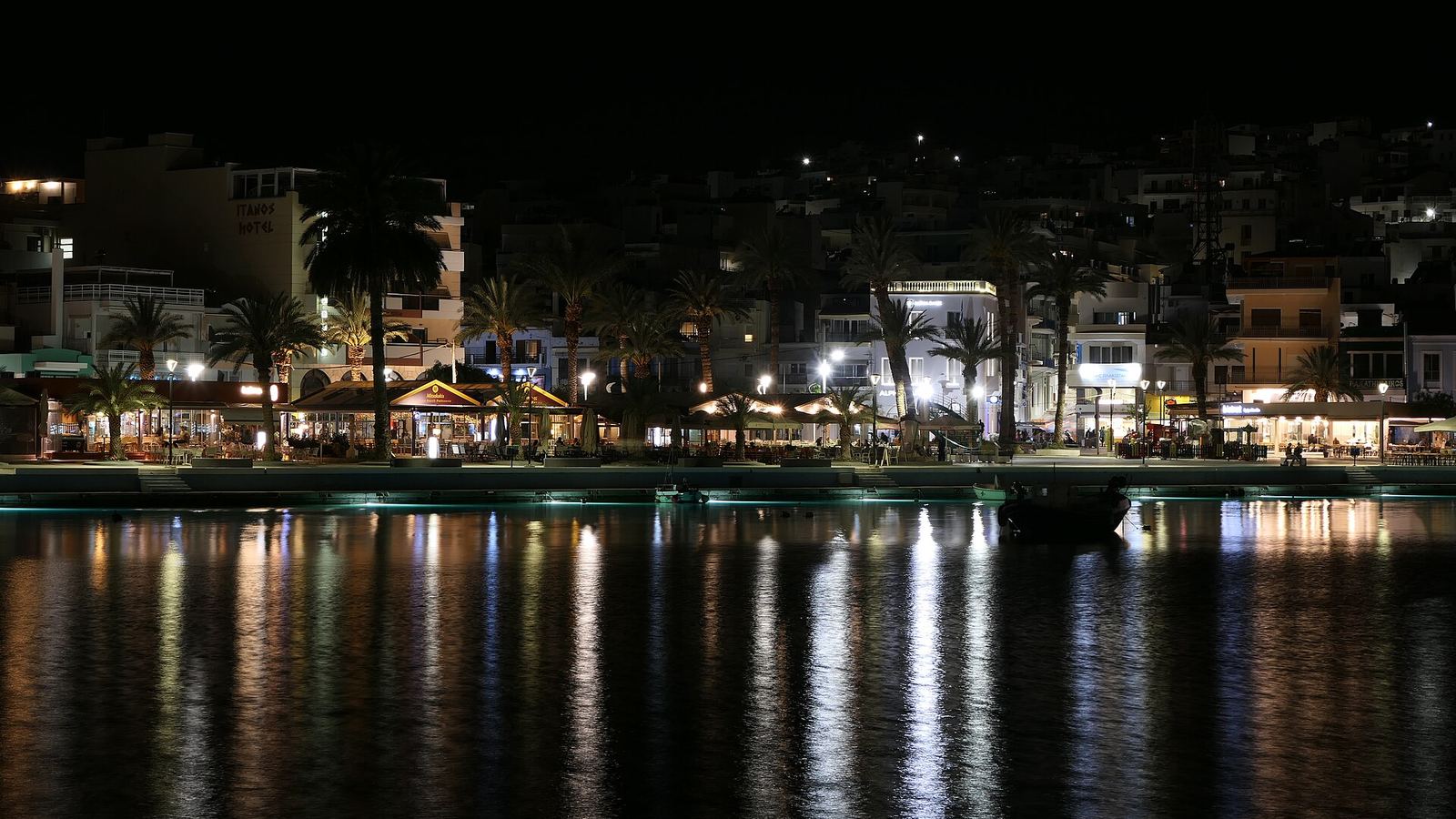
Begin readingPort Sola climbed the hill above its harbor in narrow terraces. At night, most houses vanished except for their windows.
By day it was a town of white walls and washing and steps, so many steps that visitors counted them and lost count and gave up, and the streets were less streets than staircases with names. At night the white walls went grey and then went altogether, and what was left was the pattern of the lit windows, one above another up the slope, so that the hill seemed to be made of light stacked loosely in the dark. The harbour lay at the bottom of it, a curve of black water with a few boats and a few lamps, and the sound of the sea, which in Port Sola was never loud and never stopped.
From the end of the pier, Matteo could see one window higher than the others, square and amber beneath a dark roof. He did not know who lived there. He imagined a table, a kettle, and two chairs, one of them holding a folded coat.
He had come out to the end of the pier because it was where he went in the evenings, and he had looked up because that was what one did from there, and he had found the window as he found it most nights, in its place near the top of the town, a little apart from the others, with the dark line of the roof above it and nothing above that but sky. He had never tried to work out which street it was on. He thought the kettle would be the old kind, with a whistle, and that whoever lived there would take it off the heat just before it sang, out of consideration for the neighbours. He thought the second chair was for a visitor who came sometimes and not always. He thought the coat was blue.
A fishing boat shifted against its rope. The window stayed where it was, neither brighter nor dimmer.
The boat was one of the small ones, painted a green that the salt had worn to the colour of an old bottle, and it moved because the water had moved, and the water had moved because the sea outside the harbour wall had breathed. Matteo listened to the rope creak once and go quiet. Somewhere along the front a shutter closed. A cat crossed the pier behind him with the air of a cat on business, paused at the edge to consider the water, and thought better of it. Farther out, beyond the harbour mouth, a single fishing light rode the swell where somebody had decided that the night was calm enough to work, and it rose and fell so slowly that it seemed less a boat than a low star that had not quite made up its mind. The town was going to bed in its own order, low windows first, and the amber square at the top of it went on shining with the steadiness of a lamp that had been lit early and would be put out late, by someone in no hurry to do either.
Matteo walked back toward the harbor steps. He did not try to find the house. It was pleasant to leave one warm room somewhere above the town, complete without being entered.
He had thought about it, once or twice, in the first weeks. He could have climbed the stairs and turned along the terraces until he came out beneath it, and looked up, and known. But knowing would have given him a street and a door and a name on the bell, and would have taken away the table and the kettle and the folded coat, which were his. He climbed the harbour steps slowly, and at the top he turned, as he always did, and found the window still there, a little higher now that he was closer, and still amber, and still lit for somebody. He went home through the stacked and sleeping town, and behind him the sea breathed against the wall, and the boat moved on its rope, and the window at the top of Port Sola kept its light, all night, without needing him to come.
You do not need the screen to keep this place. Close your eyes and let it continue without us.
Let the screen go darkPhotograph: Petro Stelte, CC BY-SA 4.0, Wikimedia Commons