Island evening · 6 minutes
The Lamp Room on a Calm Night
On a windless night, an island’s lighthouse attendant wipes the lens and writes a single line.
Begin readingOn the island of Inchmallow the light had looked after itself for eleven years, and for eleven years Aurel had looked after the light. Nobody had asked him to keep a log. The machinery switched the lamp on at dusk and off at dawn, and a small grey box in the store room told someone on the mainland, by some arrangement of wires he had never fully trusted, that all was well. But there had been a log in the lamp room for a hundred and forty years before the grey box arrived, and Aurel saw no reason why it should stop now.
He went up a little after ten. The tower stair turned eighty-one times, and he climbed it at the speed he always climbed it, one hand on the cold brass rail, past the small deep windows where the sea showed itself in pieces: a square of dark water, then a square of slightly darker water, then a square of stars. There was no wind at all. It was the end of September, and the island had been given one of those still evenings that autumn sometimes hands out before it gets down to business.
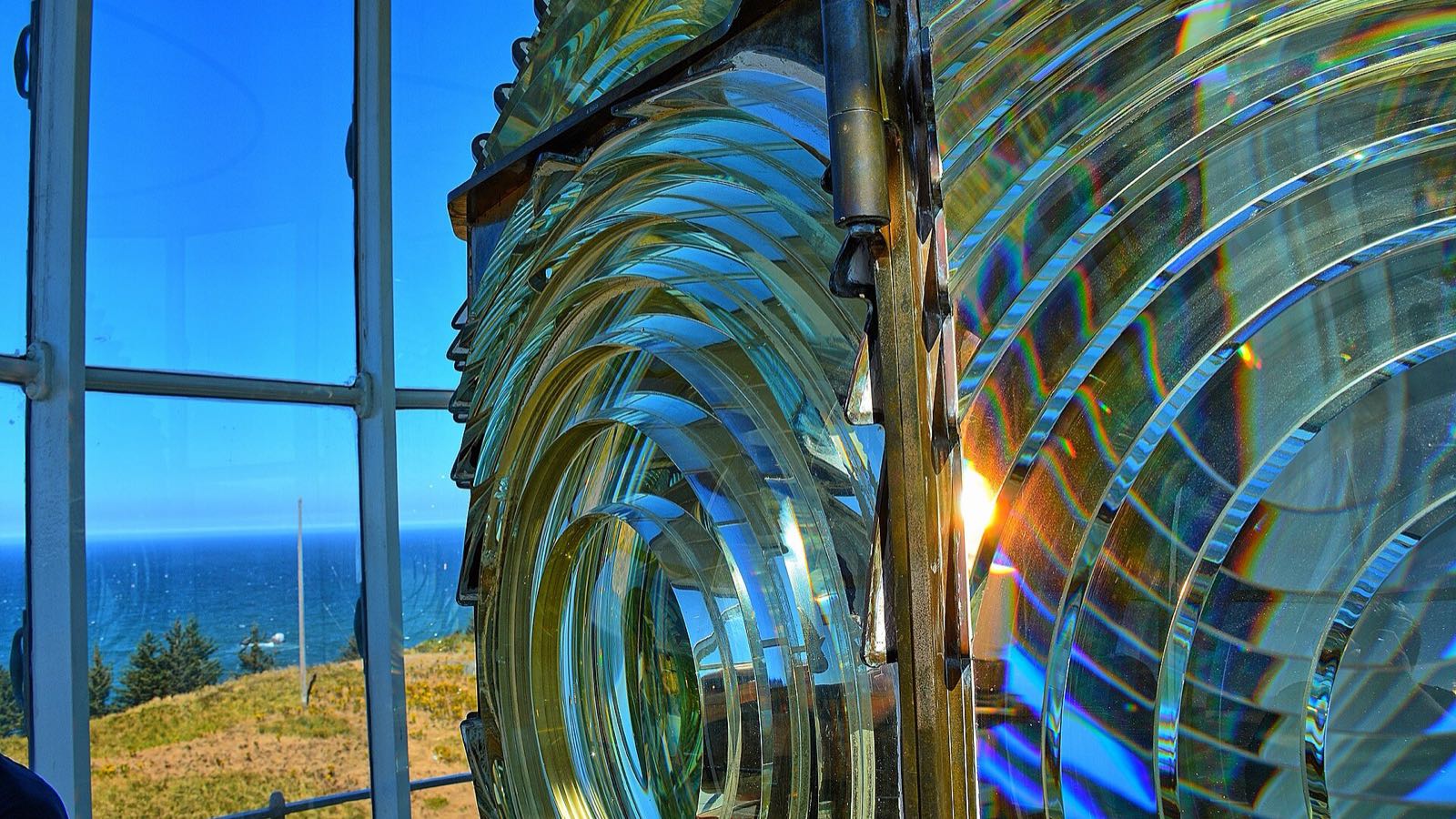
The lamp room was round and made almost entirely of glass. In the middle of it stood the lens, taller than he was, a great beehive of glass rings and prisms in a brass frame, turning so slowly that he had to watch a single bright edge for a while to be sure it was moving at all. The lamp inside it was small. It was the lens that made it large, gathering a light no bigger than a kitchen bulb and sending it twelve miles over the water as one long beam.
Aurel took the soft cloth from its hook and wiped the glass. He did it every night whether it needed it or not, and tonight it did not, there being no salt in the air and no wind to carry it. He worked from the bottom ring upward, following the curve with the flat of his hand, while the lens went round beside him at its own pace, so that he was never quite cleaning the same panel he had started on. He had long since stopped minding this. It meant the whole lens got a little attention, evenly, which was perhaps fairer anyway.
Then he sat at the small desk by the stair head and opened the log. The pages before his were in other hands: a cramped brown ink, a looping blue, a pencil that pressed so hard it could still be felt from the back of the page. Most of the entries were short. Calm. Fog until four. Wind north-west, rising. Two herring boats in the sound. He uncapped his pen, considered the evening, and wrote, in his own small upright hand: Flat calm. Clear. One vessel, eastward. Then he capped the pen again.
The vessel was a fishing boat, or perhaps a small coaster, too far off to tell. It showed as a single white light low on the water, with a faint green one beside it, moving east so slowly that it seemed to be resting. Each time the beam came round it passed over the boat without stopping, the way a hand passes over a sleeping cat, and went on across the empty sea toward the mainland, and came back around behind the tower, and found the boat again a little farther along.
Aurel sat and watched it go round. There was nothing else to watch. The sea was so flat that the beam lay on it like a path, and when it swung away the dark it left behind was soft and complete. The lens made a very faint sound as it turned, less a sound than a kind of agreement in the room. Below him, at the foot of the tower, the sea touched the rocks once and drew back, and after a long while touched them again.
Some time later the boat’s white light went behind the headland, and the sea was empty from edge to edge, and the beam went on crossing it anyway, with nothing in particular to find. Aurel did not write that down. It did not seem to need writing. He hung the cloth back on its hook, switched off the desk lamp, and went down the eighty-one turns of the stair in the dark, which he knew well enough not to need. At the bottom he looked up once through the small window by the door. The light was turning, as it would turn until dawn, without him, perfectly content to look after itself.
You do not need the screen to keep this place. Close your eyes and let it continue without us.
Let the screen go darkPhotograph: Kirt Edblom, CC BY-SA 2.0, Wikimedia Commons