Village portrait · 6 minutes
The Bakery Before Four
A village baker shapes the loaves in the dark hours, while the light only thinks about returning.
From the recurring world The Gentle Trades
Begin readingDagny’s alarm was set for half past two, and most mornings she was awake a minute before it, lying in the dark listening to the village not doing anything. She lived above the bakery in Hollin, in two rooms with a sloping ceiling, and the first thing she did each day was put her feet on the floor and feel whether the boards were warm or cold. In late September they had just begun to be cold. She put on the wool socks that had been waiting by the bed since the first of the month for exactly this, and went downstairs.
The bakehouse was dark and smelled of yesterday. She switched on one lamp over the bench, not the big lights, and lit the oven, which was old and built of brick and took a long time to come to its senses. It began with a low roar at the back, then a tick, then the slow warming of the iron door, and she left it to think things over while she looked at the dough.
The dough had been rising all night in three wide wooden troughs under linen cloths, and when she lifted the first cloth it had risen exactly as far as she had hoped and not an inch further, which was the most one could ask of anything. It was pale and domed and faintly sour-smelling, and it gave under her fingertip and came slowly back, like someone turning over in their sleep. She folded the cloths and hung them on the rail by the oven, where they would be warm when she wanted them again.
Then the flour. She scattered a handful across the bench in one long throw, a habit from her first year of training that she had never needed and never lost, and watched it settle into a fine white film under the lamp. Flour got everywhere in a bakery. It lived in the creases of her knuckles and the seams of her apron and on the top of the clock, where nobody had ever thought to dust, and in the evenings it came out of her hair onto the pillow, so that she sometimes thought she went to sleep in a very small snowfall.
She turned out the first dough and cut it with the iron scraper into pieces she did not weigh, because after twenty years her hands weighed them for her. Each piece she folded in on itself, turned a quarter, folded again, then cupped it under her palms and drew it toward her across the bench until its skin was tight and smooth. The loaves went into cane baskets lined with floured cloth, seam upward, to rest. Round ones for the shop, long ones for the café on the corner, and a dozen small rolls for Mr Penhallow, who had ordered them one Tuesday many years ago and had never once since then told her to stop.
Outside, Hollin was asleep. The window above the sink showed the lane, the pump, the dark front of the post office and the one streetlamp that stayed on all night by order of nobody remembered whom. A cat crossed under it without looking left or right. Beyond the roofs the sky was still entirely night, though somewhere to the east, very low, it had begun to look as if it were only thinking of returning to grey, and had not yet made up its mind.
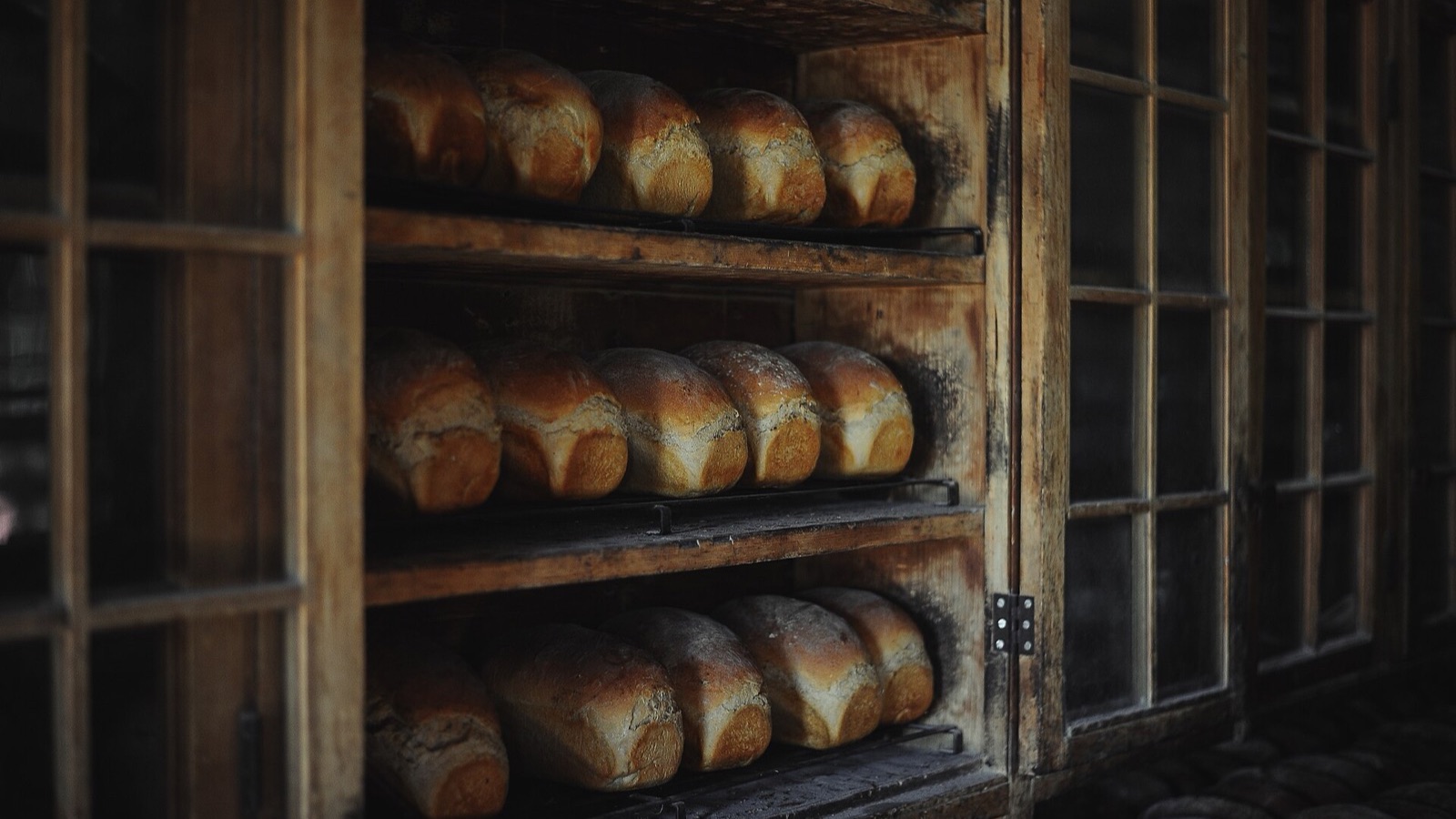
By a quarter to four the oven had come to its senses. She opened the iron door and the heat met her face like a large friendly dog. One by one she tipped the loaves from their baskets onto the long wooden peel, scored each across the top with a quick blade, and slid them onto the hot floor of the oven, where they sat in rows looking much as they had a moment earlier. That was always the curious part. For a few minutes nothing would happen, and then everything would.
She closed the door and set the timer, and then, because there was a quarter of an hour in which the bread needed nothing from her at all, she pulled the stool out from under the bench and sat down. The lamp hummed. The oven ticked. Her hands lay in her lap, white to the wrist, and she did not brush them off. Behind the iron door the loaves were beginning, slowly, to rise and colour without being watched, and upstairs in every house along the lane people were sleeping through it, and would wake later to find the bread simply there, as if it had made itself.
You do not need the screen to keep this place. Close your eyes and let it continue without us.
Let the screen go darkPhotograph: Clark Young, CC0, Wikimedia Commons