Place portrait · 6 minutes
The Observatory’s Smallest Telescope
On a hill above the town, the least impressive instrument offers the best place to sit.
From the recurring world The Hill Observatory
Begin readingThe observatory owned five telescopes. Four stood beneath copper domes and had names painted neatly on their cabinets. The fifth rested on a plain wooden tripod beside the door and was small enough to carry under one arm.
Nobody remembered who had bought it. It appeared in no inventory and had no name on its case, only a brass cap that fitted the front lens so exactly that it sighed when it came off. The larger instruments were spoken of with respect, their mirrors wiped with soft cloths and their motors oiled on a calendar. The little telescope was simply used. It went outside in every season, came back in with dew on its tube, and was propped beside the door again like a walking stick that belonged to the house rather than to anyone in it.
Ivo used it when the larger instruments were busy. Tonight they were all pointed toward a faint object beyond Saturn, their motors making careful corrections while the astronomers wrote numbers in red notebooks.
He had helped set them up, as he did most nights: opening the shutters, checking the clocks, carrying the notebooks up the iron stair. Then the astronomers had gone quiet in the particular way they went quiet when the sky was clear and the object was faint, and he had understood that the rest of the night belonged to them. That suited him. He put on his coat, took the little telescope from beside the door, and lifted the latch as gently as he could, though the domes were so full of the hum of their own machinery that nobody would have heard.
Ivo carried the little telescope outside. Below him, the town had begun its nightly habit of becoming a map: a line of lamps along the river, a dim cluster around the square, two late windows at the bakery.
He set the tripod on the flat stone beside the bench, where it had been set so many times that its three feet found their own small hollows. The grass was wet. The air had the thin, clean coldness of a hill after dark, and somewhere below, faint enough to be doubted, a dog barked twice and was answered by a door. Ivo did not point the telescope at the faint object beyond Saturn. He would not have known where to find it, and it did not seem to be the sort of thing that wanted finding by someone sitting on a bench.
He did not look for anything rare. He found the moon’s old craters, then one soft star near the horizon. A moth rested on the edge of the notebook and remained there, as if it too preferred the smaller instrument.
The moon was a few days past half, and along the line where its light gave way to its dark the craters stood out with their rims lit and their floors in shadow, the way hills look at sunset. He moved slowly along that line with the little telescope, from one crater to the next, stopping at each as one stops at a gate. After a while his eye grew tired of being careful, and he let the moon drift out of the field and simply looked at the sky with nothing between him and it. There was Saturn, small and steady and slightly yellow, where the domes were pointing. There was the river, silver where the moon reached it. There was the moth, which had not moved.
Before dawn, Ivo folded the tripod and left the chair facing the valley. The large telescopes continued their slow work behind him. The little one had discovered nothing that needed naming, which made the evening feel pleasantly complete.
He fitted the brass cap onto the lens, felt it sigh into place, and carried the telescope back inside. He propped it beside the door where it lived. Up in the domes the motors made their small corrections, and the red notebooks filled with numbers that would matter a great deal to someone, and the sky went on being the sky. Ivo hung up his coat and sat for a moment on the bottom step of the iron stair, and found that the night had left him with nothing to do but be quiet, which was the thing the little telescope had always been best at.
You do not need the screen to keep this place. Close your eyes and let it continue without us.
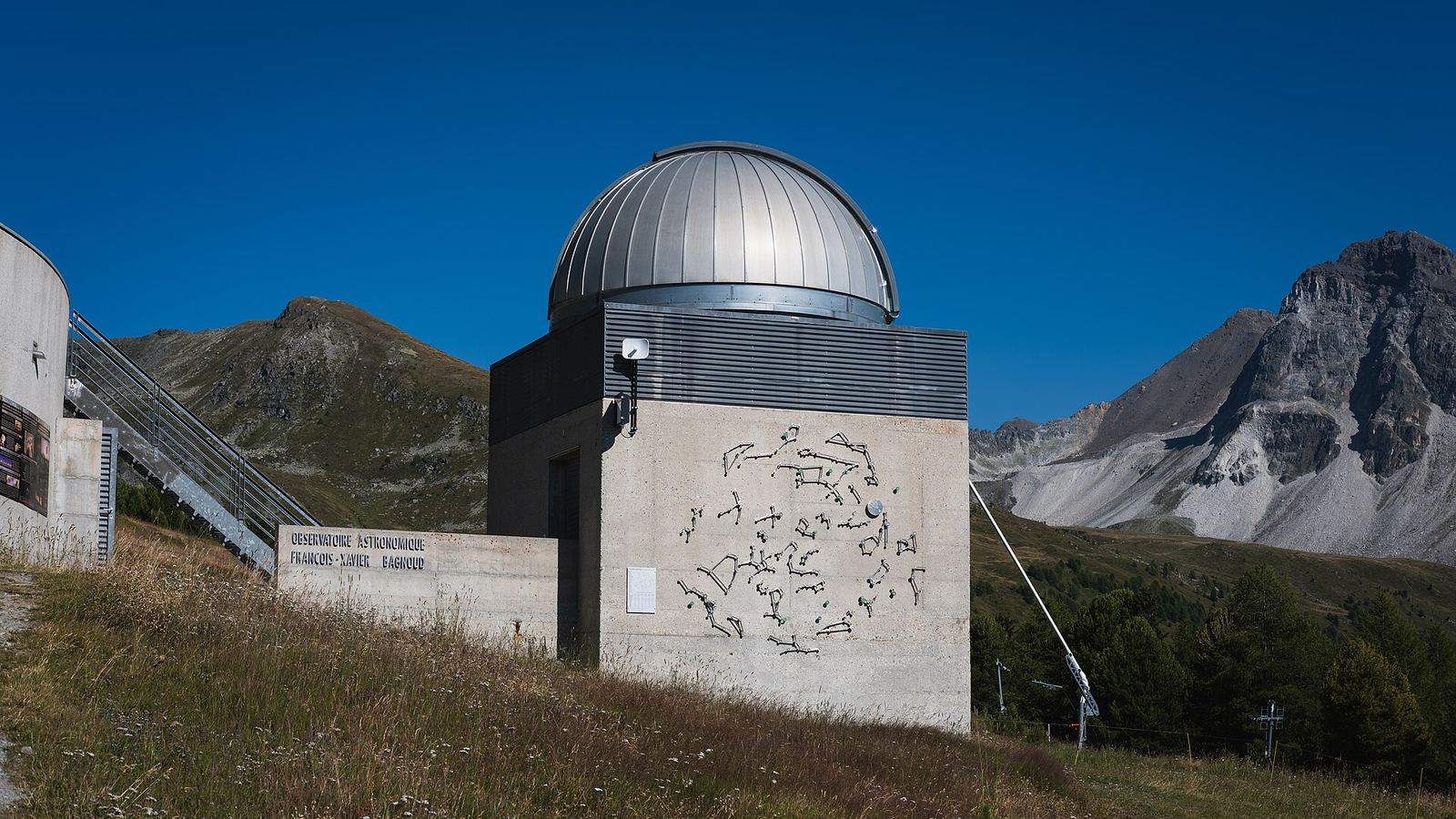
Let the screen go darkPhotograph: Christian David, CC BY-SA 4.0, Wikimedia Commons