Village portrait · 6 minutes
The Village with Three Streetlamps
A hillside village decides that three lamps are quite enough.
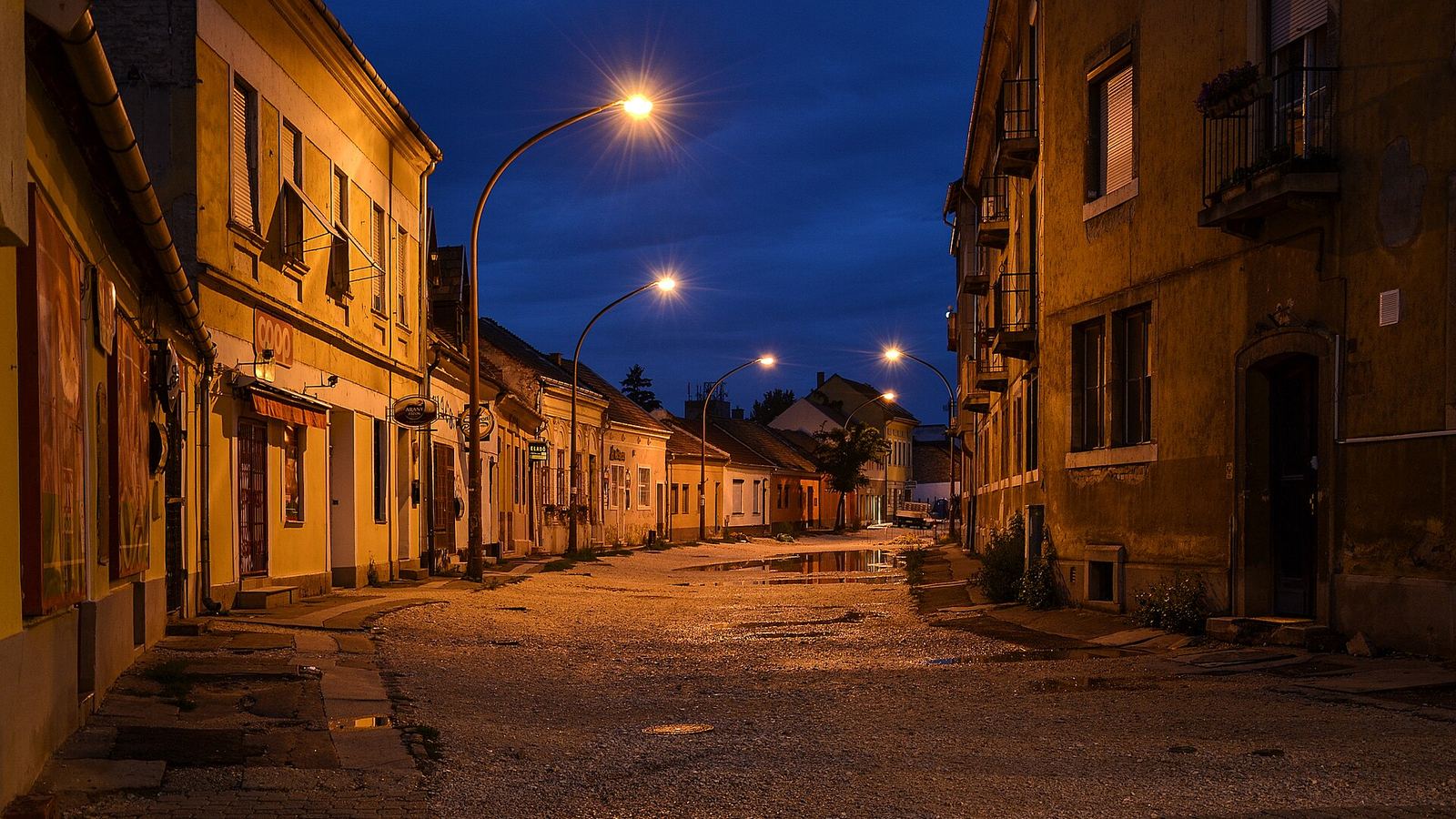
Begin readingThere were three streetlamps in Vela. One stood at the well, one at the post office, and one where the road divided around an old chestnut tree.
They had been put up in the same year, long ago, by a council that had argued for a winter about whether the village needed any lamps at all, and had settled on three as a number that nobody could call extravagant. The lamp at the well was the oldest-looking, because the well was the oldest place, and the damp had got into its paint. The lamp at the post office was the brightest, because the postmistress cleaned its glass on the first of every month with a cloth and a great deal of vinegar. The lamp at the chestnut tree was the one that mattered, and everyone knew it, and nobody said so.
Visitors sometimes asked why there were not more. The villagers pointed out that the moon knew the upper road, and every house kept a lamp in its front window on evenings without one.
This was true, and it was also a way of ending the conversation. The upper road ran along the shoulder of the hill with the whole valley open on one side, and on any night with a moon it was as bright as anyone could want. On nights without one the front windows of Vela made a thin, kindly line of light up the slope, house by house, each family keeping its lamp lit until the last neighbour had been heard going by. Visitors who stayed a while stopped asking about the lamps. Some of them, going home to towns lit all night, found that they missed the dark.
At ten, the postmistress turned off the lamp by the post office. At eleven, the baker switched off the one at the well. The chestnut lamp remained, because the night bus used it to find the turn.
There was no rule about this. It had simply come to be the way things were done, the way the postmistress locked the post office at six and the baker lit his oven at four. At ten the lamp by the post office went out with a small click that could be heard across the square if the square was quiet, and it usually was. At eleven the baker, going to bed early because of the oven, reached out of his upstairs window with a long stick that had been made for the purpose and turned off the lamp at the well. After that the village had only the chestnut lamp, and the windows, and the stars, which on a hillside in Vela were a good deal more than three. The postmistress, who could not sleep until she had heard the baker’s stick, lay listening for it every night, and every night it came, and she turned over.
After the bus had passed, the driver flicked the interior light twice. Someone in the nearest house answered by closing a curtain. The final streetlamp went dark, and Vela returned the hill to the stars.
The bus came up the valley road a little before midnight, its headlamps swinging across the vines, and slowed for the turn where the chestnut tree stood. It never stopped in Vela at that hour. It only used the lamp to find its way, and having found it, went on up the hill toward the next village with its two passengers and its driver, who had been driving this road since he was young and had never once missed the turn, but who would not have liked to try it without the lamp. The two flicks of his inside light were his thanks. The curtain closing was the reply. The chestnut lamp went dark on its own, on a switch in the nearest house that had been wired that way so long ago that nobody remembered it being done, and the village, which had been almost dark, was dark entirely, and the hill went on up into the night above it exactly as it had before there were any lamps at all.
You do not need the screen to keep this place. Close your eyes and let it continue without us.
Let the screen go darkPhotograph: Pudelek, CC BY-SA 4.0, Wikimedia Commons