Place portrait · 8 minutes
The Observatory on a Night of Cloud
When the sky closes over, the astronomers make tea and the domes stay shut.
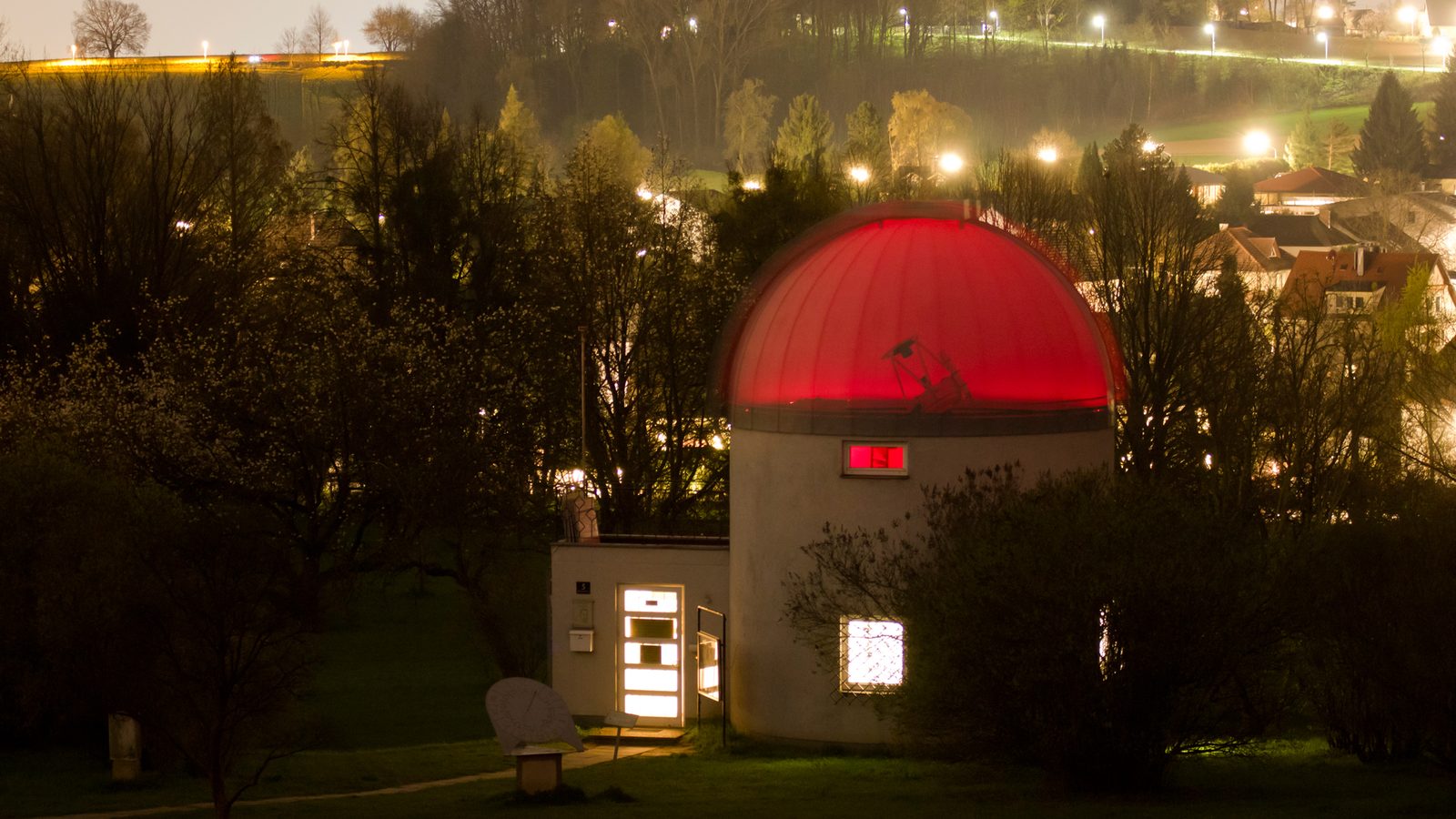
From the recurring world The Hill Observatory
Begin readingThe cloud came in from the west a little after nine, the way it had been promised to, and by half past the sky over the hill was a soft grey lid from one edge to the other. The domes stayed shut. Ivo, who had climbed the iron stair with the red notebooks under his arm as he did every evening, carried them down again and put them back on their shelf.
There was no disappointment in the building. The astronomers had seen the forecast and had known since afternoon that tonight would be one of the closed nights, and a closed night at the observatory had its own habits, older than any of them, that began with the kettle. Somebody filled it. Somebody else found the tin with the biscuits. The lamps in the long room under the main dome were turned up, which on a working night they never were, and the room, which was usually a place of dark and murmured numbers, became for once simply a room, with a table in it and chairs and five people who were glad to sit down.
Ivo did the small work that a closed night allowed. He took the eyepieces from their velvet drawer and cleaned them one by one with the soft cloth and the breath and the patience they required, holding each up to the lamp to check for the faint bloom that a night’s use always left. He wound the clock on the wall, which drove nothing any more but was wound because it always had been. He went out to the porch and brought in the little telescope from beside the door, where it had been left with dew on it, and dried its tube and fitted its brass cap, and stood it in the corner of the long room, out of the way, where it seemed to him to be listening.
The oldest of the astronomers had taken down one of the bound logbooks from the shelf, as she generally did on closed nights, and was reading aloud from it in a low voice for anyone who wanted to listen. It was from forty years before. The hand was neat and the ink had gone brown, and the entries were mostly weather: clear, clear, high cloud, clear, closed. Now and then there was a line that was not weather. Moon very fine tonight. Saw the rings well. Cloud at midnight; drank tea. Ivo, cleaning the last eyepiece, found that he liked the tea entries best. Whoever had written them had sat in this room on a night like this one and had thought it worth recording.
The rain arrived at ten. It came softly at first, a change in the sound of the roof more than anything, and then more steadily, and the main dome, which was copper and very old, took it with a low continuous hum that filled the building like a held note. Nobody spoke for a while. There is a particular pleasure in being under a large roof in rain, and the observatory’s roof was larger and rounder than most, and the astronomers, who spent their working lives with it open to the sky, seemed to Ivo to be enjoying, for once, having it shut.
He went out onto the balcony that ran round the dome. The rain was fine and cold and the hill smelled of wet grass and stone. Below, the town had lit itself as it always did, the line along the river, the square, the bakery, but the lights were softened tonight by the rain in the air and had halos, and above them the cloud lay so low that the top of the church tower went into it. There would be nothing to see tonight. There would be nothing to see tomorrow, perhaps, or the night after. And then the sky would clear, as it always cleared in the end, and the shutters would roll back and the motors would take up their careful corrections and the red notebooks would fill with numbers again. The sky was not going anywhere. That was the thing about it.
Inside, the logbook had been closed and the tea drunk and one of the younger astronomers had fallen asleep in the armchair by the stove with his glasses still on. The oldest one took them off him, gently, and put them on the table. Somebody turned the lamps down after all. The rain went on with its held note on the copper, and the little telescope stood in its corner with its cap on, and Ivo sat on the bottom step of the iron stair as he liked to do at the end of a night, and found that this one had ended earlier than most and had been, in its way, as full as any of them.
He would go down the hill in the rain in a while, and the astronomers would go to the rooms they kept in the annex, and the domes would stay shut over their instruments until the weather said otherwise. Above the cloud the moon was doing what the moon did, and Saturn was where Saturn was, and the faint object beyond it went on being faint and patient and entirely unbothered by not being looked at. Cloud at ten, Ivo thought. Drank tea. It was, he decided, a good night to write down.
You do not need the screen to keep this place. Close your eyes and let it continue without us.
Let the screen go darkPhotograph: H. Raab, CC BY-SA 4.0, Wikimedia Commons