City story · 7 minutes
The Last Tram to the Depot
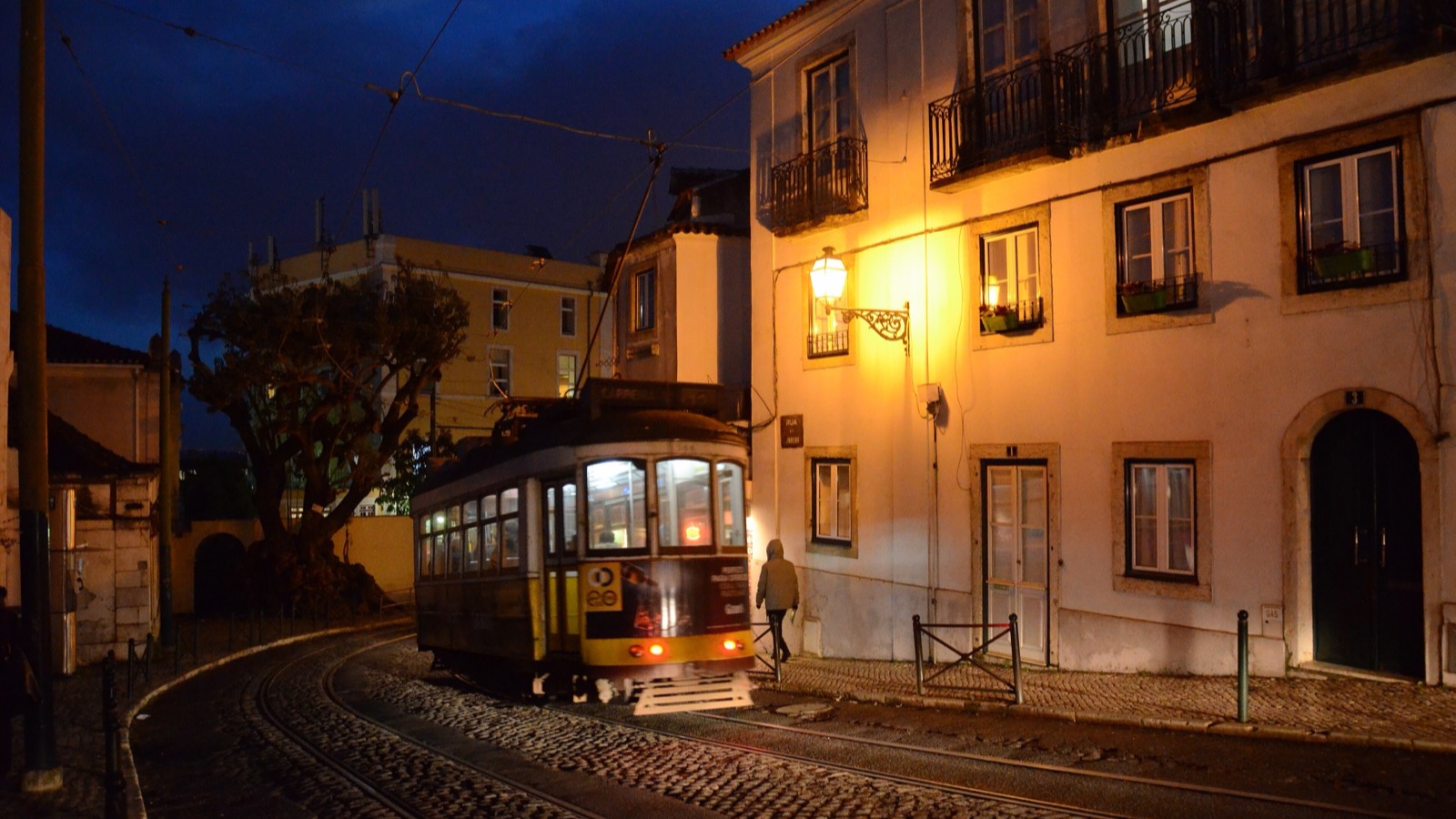
After midnight, an empty tram crosses a rain-wet city and is put to bed among the others.
Begin readingThe last tram on the number nine route left the terminus at twelve minutes past midnight, and for the third night running there was nobody on it but Lotte. She drove it anyway, as the timetable asked, and as she rather liked to, because the city at that hour was a different city from the one she drove through by day, slower and wetter and more inclined to keep to itself.
It had been raining since teatime, a fine steady October rain that did not fall so much as hang in the air and wait to be walked through. The rails ahead were two lines of light running away down the hill, each one holding a long thin reflection of the street lamps, and the tram followed them the way a reader follows a line of print, without needing to look where it was going. Lotte rang the bell at the first crossing out of habit, though there was nothing to warn but a cat on a wall, which regarded her with complete indifference and did not move.
Behind her the car was lit and empty. The seats were slatted wooden benches facing one another in pairs, and on one of them someone had left a folded newspaper that had gone soft in the damp. At the back, by the rear doors, stood the conductor’s seat, a high stool with a small brass rail, where nobody had sat since tickets began to be bought at the stops. The company had never taken it out. Lotte was glad of that; it gave the car the feeling of being attended, even with no one there.
She went down through the market streets. The shops had their shutters drawn, and their painted names stood out above them in the wet light: a baker’s with a single lamp burning at the back, a flower stall folded into a green wooden box, a hatter’s window full of hats on wooden heads that seemed to turn very slightly as she passed. At each stop she slowed and opened the doors, because that was the rule, and the rain came in a little way, looked around, and went out again, and she closed them and went on.
At the bottom of the hill the street opened onto the river, and the tram went out over the old iron bridge with a deeper, hollower sound, as though the rails had remembered there was water under them. Lotte always slowed here. Below, the river was full and dark and moving steadily seaward, carrying the lights of both banks broken into short bright pieces. A barge lay moored by the far wall with a lamp in its cabin. The bridge lamps went by one by one, each wearing a small round halo of rain.
On the far side the city thinned. The houses grew lower and farther apart, the streets had plane trees in them dropping their wide brown leaves onto the rails, and the stops came less often. The depot lay at the end of the line, past the last shelter, where the rails left the road and ran through an open gate into a yard of wet cobbles. Lotte rang the bell twice, which meant coming in, and the night foreman lifted a hand at the window of his hut without looking up from his crossword.
The shed was long and high and dim, with a roof of old glass panes on which the rain drummed softly, and inside it the trams stood in their rows, eight to a track, nose to tail, windows dark, poles lowered. Lotte brought the number nine down the third track at a walking pace and stopped it a hand’s width from the car in front, which she had parked there herself at the same hour the night before. She lowered the pole. The lights in the car went out, and the shed came into its own: a smell of oil and wet iron, the tick of cooling metal, rain on glass.
She walked back through the dark car, picked up the folded newspaper and laid it on the conductor’s seat, where somebody in the morning would find it and perhaps finish the crossword. Then she stepped down and stood a moment between the rows. The trams waited in the half dark like horses in a stable, patient and broad, each holding its route number in a small window above the cab. In a few hours the first of them would roll out into the grey morning, and the city would get on and off them all day without thinking about it, which was exactly as it should be.
Lotte signed the book in the foreman’s hut, wished him good night, and walked out under the depot gate with her collar up. Behind her the shed stood quiet over its sleeping cars. Ahead of her the rails ran away toward the city, shining and empty, back over the bridge and up through the market streets to the terminus, carrying nothing now but the rain.
You do not need the screen to keep this place. Close your eyes and let it continue without us.
Let the screen go darkPhotograph: Steven Lek, CC BY-SA 4.0, Wikimedia Commons