Island evening · 7 minutes
Low Tide at the Orra Jetty
The evening tide goes out, the ferry rests on the sand, and the island waits for the water to come back.
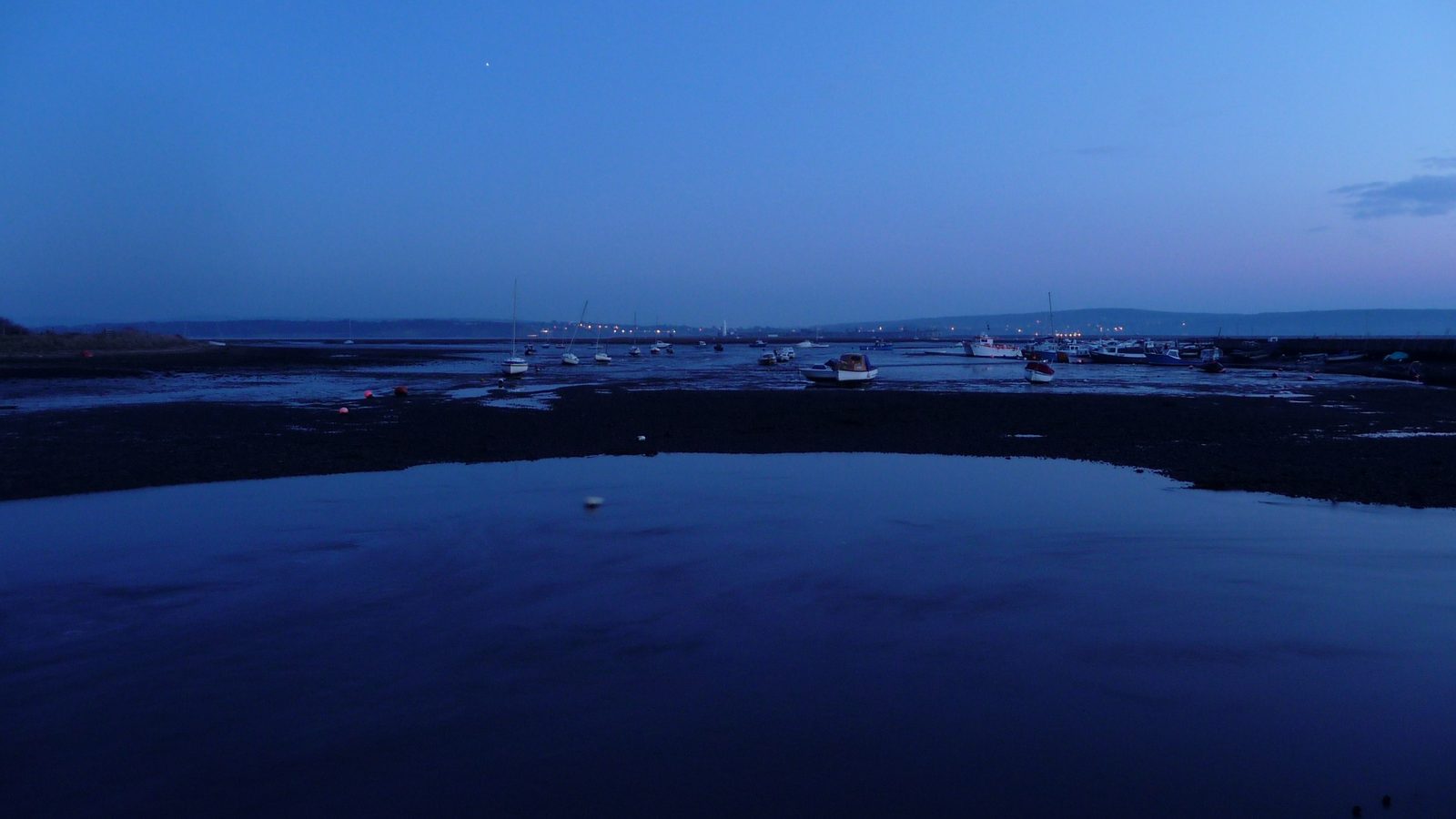
Begin readingThe tide went out from Orra in the early evening, and the harbor emptied itself the way a room does after a party: slowly, and then all at once, until there was only sand and the things that had been under the water all day, waiting to be looked at.
Mina had watched it from the window of her room above the inn. At five the ferry had been afloat, tugging a little at its rope. At six it had settled by the jetty with a slight list, and now, at seven, it sat on the wet sand with its rope slack and its hull showing a line of green where the sea had been, like a boat in a painting of a boat. Nobody on the island appeared to find this remarkable. The tide had been doing it twice a day for longer than there had been a jetty to do it beside.
She went down and along the front. The shop had closed and the six baskets that had come across with her the night before were stacked empty beside its door, upside down, drying. The green bicycle leaned where it had been left. Somewhere behind the inn a radio was on very low, and a dog she had not seen before came out to the end of the jetty with her, sat, looked at the sand, and went back, as if it had confirmed something.
The deckhand was there, on a plank laid across two crates, painting the ferry’s name. He did it every autumn, he said, while the boat was sitting still and there was no one to take across. The letters were white on the dark blue of the bow and had been painted so many times, by him and by whoever had painted them before him, that they stood a little proud of the surface. He was on the second letter. He did not hurry, and Mina, who had come out to see the tide and not to watch a man paint, found that she did not mind standing there a while.
The sand between the boats was ribbed by the water that had left it, and in the low places it held pools, and in the pools the sky was, pale green going to grey. A small crab moved from one pool to the next with the air of a person crossing a road. Weed lay in dark swathes where the tide had combed it. The smell was strong and clean and Mina breathed it and found that she had been waiting a long time, without knowing it, for exactly this smell.
Beyond the harbor mouth the sea had not gone anywhere. It lay out there in the last light, flat and grey and patient, a long way off and no distance at all, and the lighthouse on the point had begun its work early, as it did in autumn, turning its slow light over water that did not yet need it. The deckhand finished the second letter and began the third. A light came on in the inn behind her, and another in the cottage above the shop, and the island, which had been growing dim without her noticing, was suddenly a place with windows.
It would come back, the deckhand said, without looking up. By ten there would be water under the boat and by midnight it would be floating and by morning it would be tugging at its rope again as if it had never been anywhere else. He said it the way one says that it will be dark by nine, as a plain fact about the world that had been true for a long time and would go on being true. Mina asked whether he ever stayed to watch it come in. He said he had, once, when he was young, and that it had taken all night and been worth it, and that he had not needed to do it again.
She walked back along the front slowly. The pools had gone dark and were holding the first lights of the harbor instead of the sky. The dog had gone in. The bicycle was still there and would still be there in the morning, and someone would ride it up the hill with bread in the basket, and the ferry would be afloat and the deckhand would have the paint tin put away and the name would be white and whole for another year.
In her room she opened the window as far as it would go and lay on the bed with her coat still on, listening. There was nothing to hear yet. But the tide had turned somewhere out beyond the point, and the sea was coming back to Orra at its own pace, over the sand and up around the crates and under the boat, and she would not need to be awake for it. It would be there in the morning, as it always was, and the island would be floating on it, and the smell would be the same.
You do not need the screen to keep this place. Close your eyes and let it continue without us.
Let the screen go darkPhotograph: Lewis Clarke, CC BY-SA 2.0, Wikimedia Commons