Quiet voyage · 6 minutes
The Boat That Carried Only Letters
Across a wide lake, the smallest post boat visits four islands before breakfast.
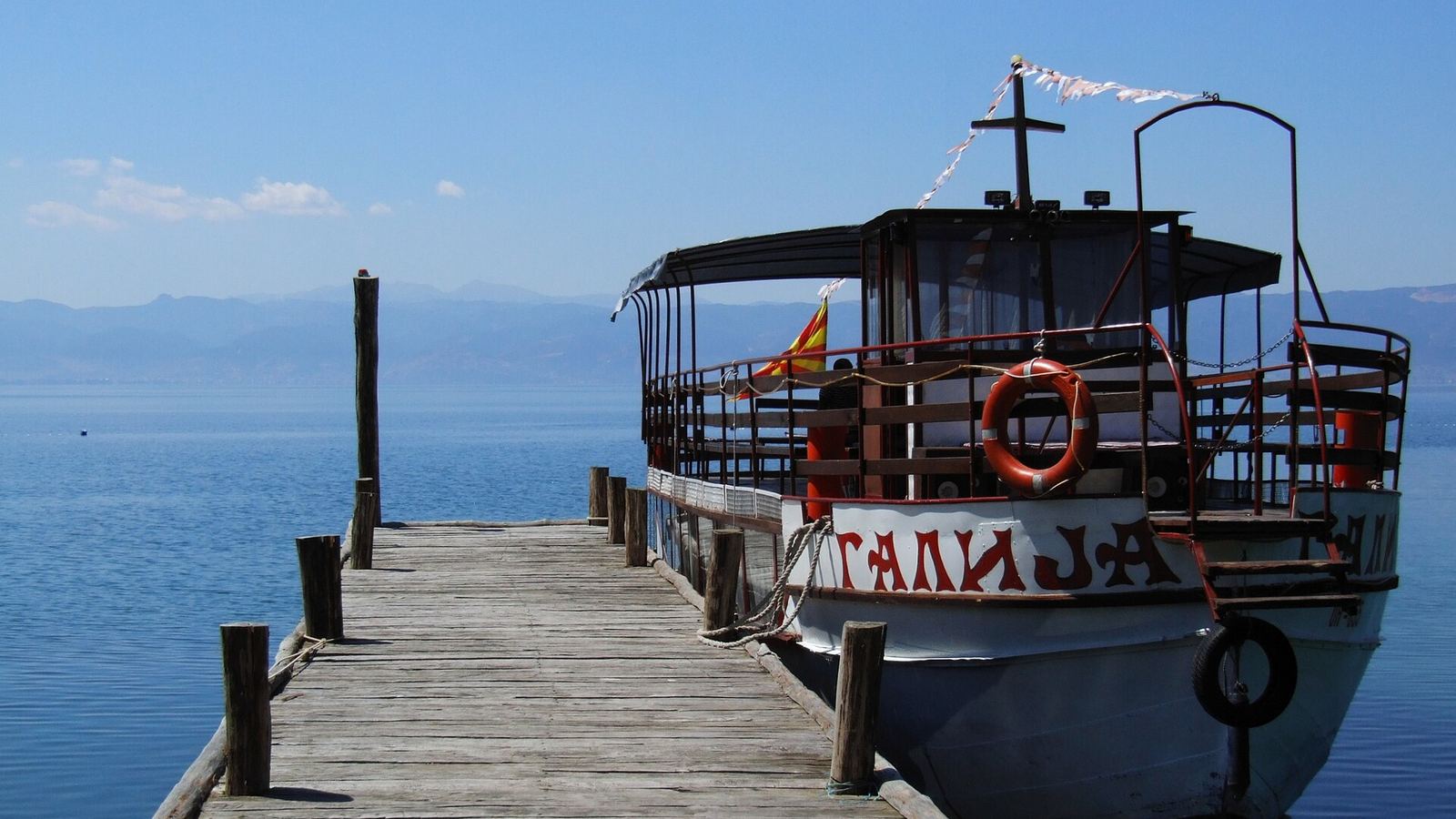
Begin readingBefore the passenger ferries began, a red boat left the north pier with three canvas sacks beneath its bench. It carried no cargo except letters, though the boatman sometimes accepted a loaf or a newspaper if there was room.
The lake was still dark when he cast off, and the pier lamp made a small yellow room on the water that the boat left almost at once. He had done this run for so many years that he no longer thought of it as early. It was simply the hour at which the boat went, the way the sun had an hour and the shop had an hour, and he had shaped his sleeping and his suppers around it until the hour seemed to belong to him. The engine started on the second pull, as it always did, and settled into the one low note it would keep until he was home.
The first island had a green box at the end of its jetty. The boatman exchanged two bundles for one. At the second, an old man waited with a thermos and handed over a postcard addressed to a house only visible on clear days.
The green box had a lid that stuck in damp weather, and this morning it stuck, and the boatman worked it loose with the flat of his hand the way he did most mornings between October and April. Inside were the island’s outgoing letters, tied with string by whoever had put them there last, and he swapped them for the bundle from the mainland without reading any of the names, though he knew most of them. At the second jetty the old man had been waiting long enough that the thermos had gone lukewarm. They drank from its cup in turn, saying very little, looking at the water, until the old man remembered the postcard in his coat and brought it out and handed it over with the air of someone releasing a bird.
Mist rested on the middle of the lake. The boat entered it without ceremony. Water tapped the hull, the engine kept one low note, and the four islands temporarily disappeared from one another.
It was not a thick mist, only a low one, lying on the water like a sheet on a bed, and the boat’s bow went into it and was lost and the boatman could see his own hand on the tiller and not much beyond it. He did not slow down. The lake was deep here and had nothing in it to strike, and he had crossed this stretch blind so often that his hands knew the heading better than his eyes did. Sound behaved oddly in the mist. A bird he could not see called once from somewhere that might have been near or far. The engine seemed louder and then, as the mist thickened, softer, as if it were being politely absorbed.
At the farthest jetty, seven letters were waiting under a stone. The boatman placed them in the dry sack and turned home as the mist began to lift.
The stone was a flat grey one that had been chosen for the purpose a generation ago and was now smooth on top from being lifted. Under it the letters lay in a neat pile, addressed in three or four different hands, and he counted them the way he always counted them, not because the number mattered but because counting was a way of saying good morning to each. The mist had begun to thin while he stood there. The middle of the lake came back first, then the second island with its jetty and its old man gone in to breakfast, then the low green line of the first, and finally the north pier with its lamp still lit, small and patient across the water.
He did not know what any letter said. He preferred them that way: small sealed journeys, crossing the water while the lake was still quiet enough to hold every sound.
The sun came up behind him on the way back and laid the boat’s shadow out ahead of it on the water, long and red. By the time he reached the pier the first ferry would be warming its engine and the day would have properly begun, with its timetables and its passengers and its noise. But for now there was only the hum of the boat and the three sacks and the thought of a postcard going to a house that could only be seen on clear days, on a morning that was, by the look of it, going to be one.
You do not need the screen to keep this place. Close your eyes and let it continue without us.
Let the screen go darkPhotograph: Pudelek (Marcin Szala), CC BY-SA 3.0, Wikimedia Commons