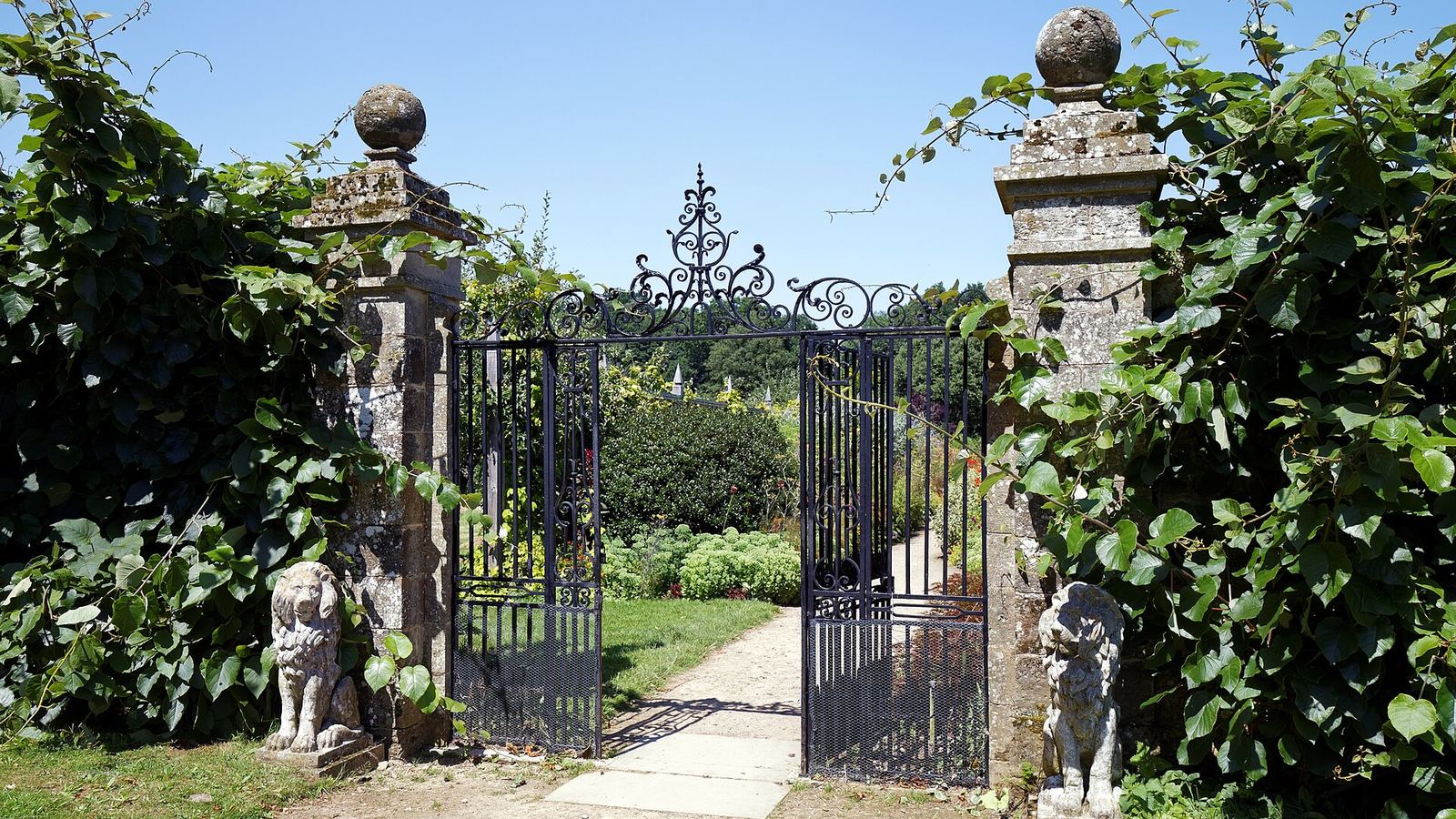
Garden story · 5 minutes
The Keeper of the Hill Garden
At dusk, a gardener closes gates that the wind has been opening all day.
Begin readingThe garden had seven gates, though only two led anywhere beyond it. The others separated the orchard from the herbs, the herbs from the long grass, and the long grass from a small pond where no fish had been kept for years.
It was an old garden and had been laid out by someone with a liking for walls. Every part of it was enclosed, and every enclosure had its gate, so that walking from the top of the hill to the bottom meant passing through five of them, and a visitor unused to the place would arrive at the pond slightly out of breath from opening and closing. Oren had never thought of the gates as an inconvenience. They divided the garden into rooms, and a garden with rooms was a garden in which one could be alone even on a busy afternoon.
Every evening Oren walked the hill and closed them. The lower gate lifted slightly on its hinges and required both hands. The gate near the pears closed with one finger. He knew each by its sound.
The wind had been at them all day, as it was most days on the hill, nudging them open an inch at a time until by evening the whole garden stood ajar. He began at the bottom, by the road, where the lower gate had swung wide enough to let in a drift of leaves. He lifted it, walked it shut, and dropped the latch, which fell with the flat iron sound he had heard perhaps ten thousand times. The herb gate was next, then the gate in the long grass, whose top bar had been polished by a century of hands to the colour of honey.
At the pond he waited while a circle in the water widened and disappeared. He checked the latch twice, not because it needed checking, but because the second touch was part of the walk.
Something had risen and gone under, or a drop had fallen from the willow, or the pond had simply moved in the way still water sometimes does when the evening cools. He did not need to know which. The reeds stood up dark against the last light and a moorhen said one soft thing from inside them and was quiet. Oren stood with his hand on the cold latch until the water was a smooth sheet again, holding the first star. A bat went over, once, low, and did not come back. The willow let go of another drop, and this time he saw it fall, and watched the rings go out to the edge and stop there, as if the pond had a rule about how far a thing could travel after dark.
The last gate stood above the orchard. From there, the village roofs fitted easily beneath the branches. Oren closed it, rested his palm on the cool wood, and listened as the wind tried each of the seven latches in turn.
It would go on trying all night and would open nothing; and in the morning he would come up the hill and find the gates as he had left them, and by evening the wind would have worked them loose again, and he would walk the hill and close them, and that was the whole of the arrangement. He found he did not mind it. Some work is finished when it is done, and some work is finished when it is done every day. Below him the village lit one window and then another, and the orchard held its dark round shapes against the sky, and Oren went down through his seven closed rooms to the house, where the kettle was, hearing behind him the small patient sound of the latches being tested and found good.
You do not need the screen to keep this place. Close your eyes and let it continue without us.
Let the screen go darkPhotograph: Acabashi, CC BY-SA 4.0, Wikimedia Commons