Archive story · 6 minutes
The Archive of Unsent Postcards
A librarian sorts pictures of places people meant to write from.
Begin readingThe archive accepted postcards that had been bought but never sent. Some were blank. Others began with weather, or the quality of the hotel breakfast, and ended before the writer found room for a signature.
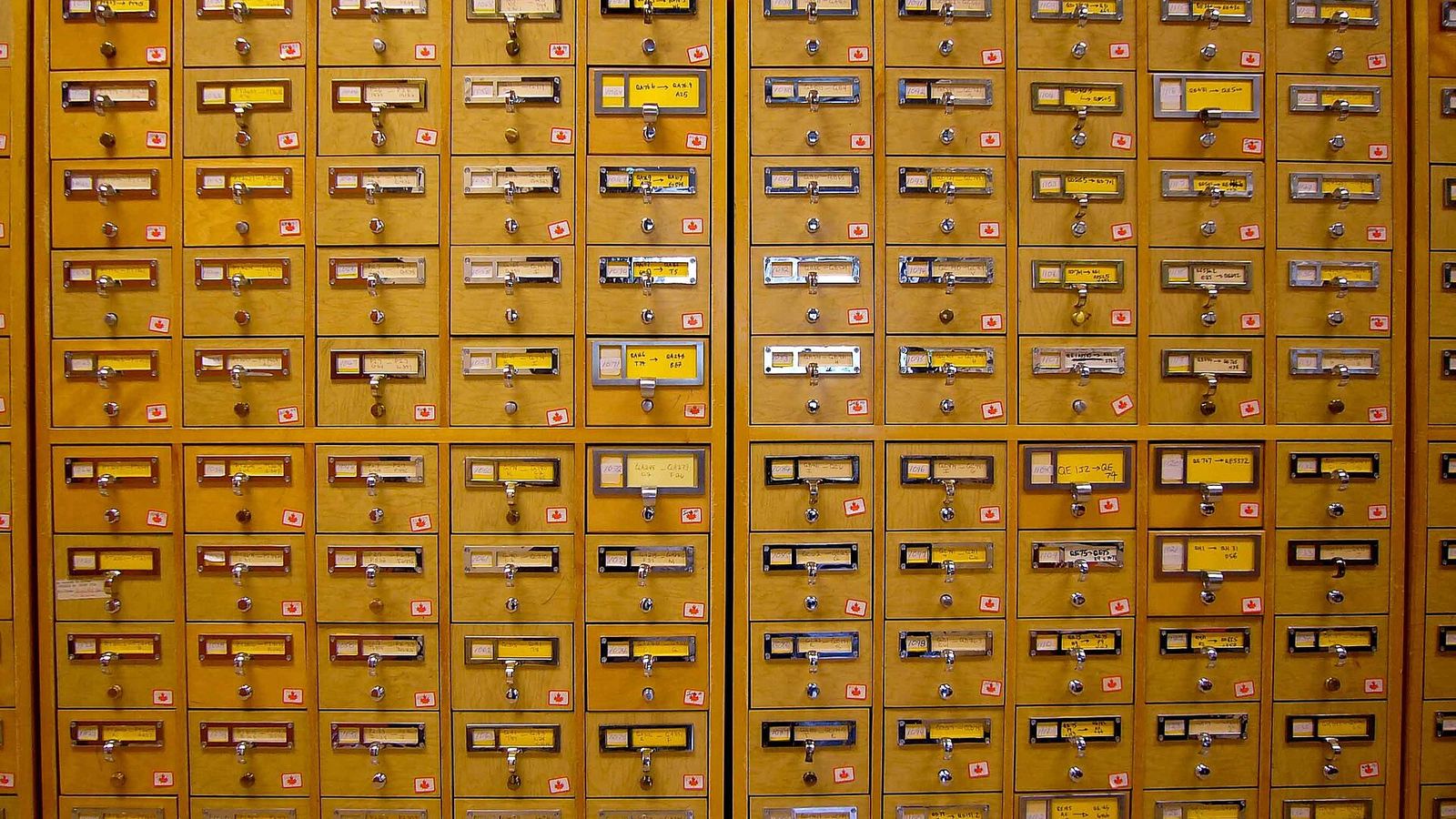
It occupied two rooms at the top of a library, up a stair that most visitors did not know was there, and it had begun, as such things do, by accident: a box of cards left to the library by a woman who had travelled all her life and never once posted anything. The librarians had not known what to do with them and had not been able to throw them away. Word had spread in the slow way that word spreads among people who keep things. Now the cards arrived by the shoebox, from attics and drawers and the backs of bookshelves, and Leonie had two rooms and a great many small wooden boxes and a job that nobody else in the world seemed to have.
Leonie sorted them by landscape rather than country. Mountains went in one drawer, harbors in another. Hotels with striped awnings occupied two small boxes near the window.
It had seemed the only honest way. A person who bought a picture of a lake was not thinking of the country the lake was in; they were thinking of the lake. So the lakes lived together, still and blue, from a dozen different places, and the railway stations lived together, and the cathedrals, and the beaches with their rows of striped huts. There was a drawer for pictures of the sea with nothing in them but sea. It was one of the fullest. Leonie thought she understood why a person might buy such a card and then find that there was nothing to write on it, since the picture had already said everything.
One card showed a station at dusk. On the back someone had written, ‘The train is later than expected, which is fine.’ Nothing followed.
She turned it over and looked at the station again. It was a small one, with a canopy and a single lamp and a bench, and the sky behind it had the deep blue of the last quarter-hour before dark. There was no train in the picture. The writer, she thought, had sat on that bench or one like it and started to explain, and then had looked up and found that the explanation had already been made, in the light and the lamp and the empty line curving away, and had put the pen back in a pocket and simply waited. Which is fine, the card said. Leonie found that she agreed.
Leonie placed it with the journeys. She liked unfinished messages because they had already let their writers continue elsewhere.
The journeys drawer held cards that had been begun in motion, from ferries and dining cars and the front seats of buses, and their messages had a particular quality: they looked out of the window in the middle of a sentence. Weather good so far. We have just passed a. The hills here are. Leonie did not think of them as failures. A finished postcard was a small closed thing that had done its work. An unfinished one was still open, and through the opening you could see, quite clearly, the person setting it down to look at something better.
At closing, she covered the boxes with linen cloths. Hundreds of unsent places rested beneath them, no longer waiting to arrive.
The cloths were an old habit from the days when the rooms had been used for maps, and she had kept it because the boxes looked kinder covered, like birds with a cloth over the cage. She switched off the lamp by the window, where the hotels with striped awnings were, and then the lamp by the door. The stair down into the library was dark and she knew every step. Somewhere below, the last reader was being gently told the time. Above her, in the two rooms under the roof, all the mountains and harbours and empty seas lay in their drawers in the dark, keeping the beginnings of a great many sentences that had never needed to end.
You do not need the screen to keep this place. Close your eyes and let it continue without us.
Let the screen go darkPhotograph: Paul Joseph, CC BY 2.0, Wikimedia Commons