Walking story · 5 minutes
A Slow Walk Along the Canal
Four bridges, two sleeping boats, and nowhere particular to be.
Begin readingThe towpath began behind the last open café and continued beneath four bridges. Mira decided to walk only as far as the second, then changed her mind when she reached it.
The café had two tables outside and nobody at them, and a waiter stacking cups who nodded to her as she went past as if she were a regular, which she was not. Beyond it the lamps stopped and the towpath went on without them, a pale strip of gravel between the black water and a wall with ivy on it. It was not late, but it was the hour when a city stops being one thing and starts being another, and the canal was where the change happened first. The water was so still that the first bridge stood on its own reflection like a stone ring.
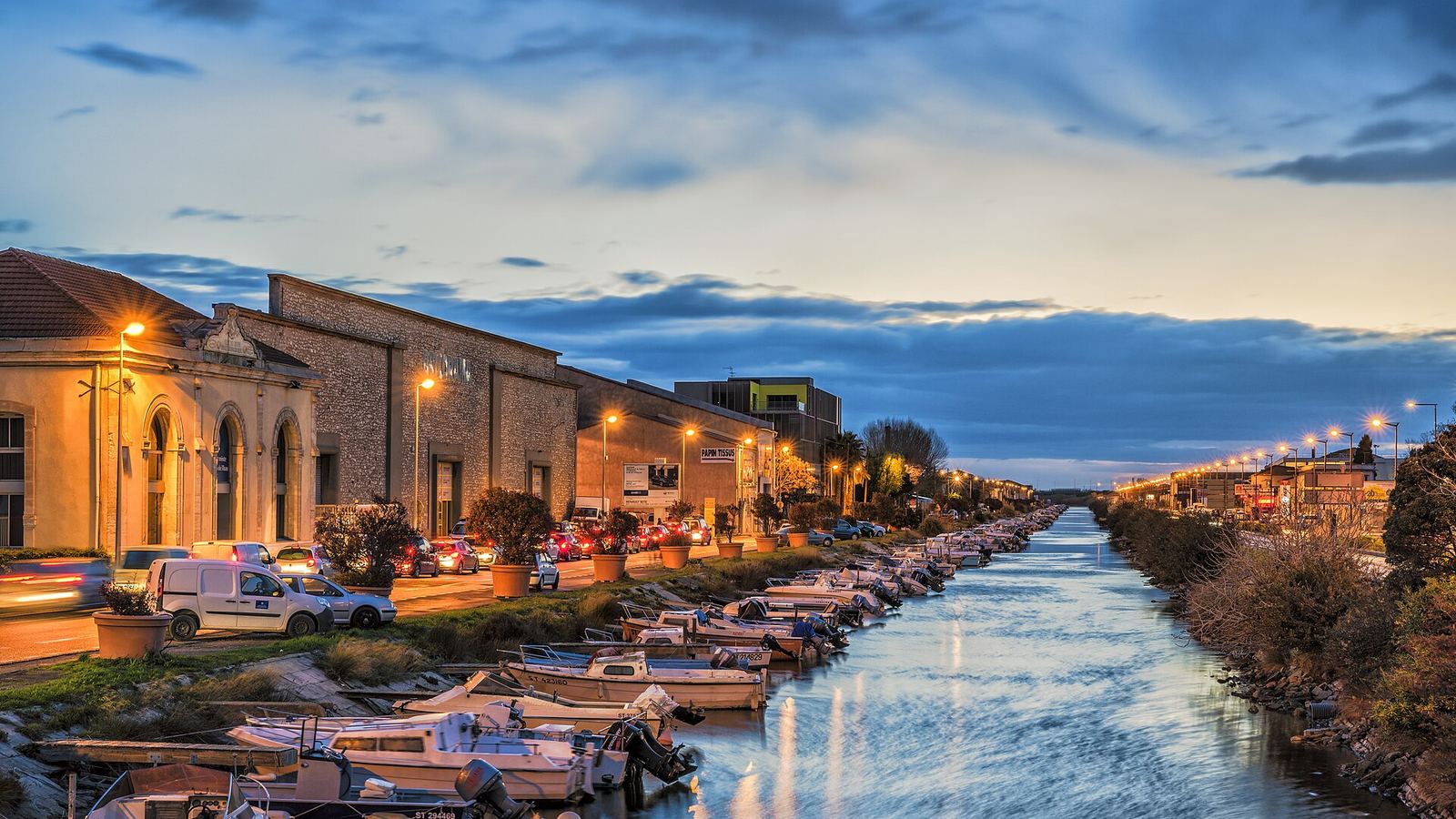
Two narrowboats were tied to iron rings. On one roof stood a row of empty flowerpots. On the other, a coil of rope had been arranged so neatly that it seemed already asleep.
There were curtains in the small windows and a faint light behind one of them, the sort of light a person reads by in bed. Someone had left a pair of boots on the step. The flowerpots had been planted in spring, by the look of the soil, and had held whatever they held until the end of the summer and were now simply pots, waiting, with the calm of objects that have done this before. Mira stood for a moment by the rope. There is a kind of tidiness that is a form of rest, and the boat had it. She went on past under the second bridge, which was where she had meant to turn back, and found that her feet had made a different decision.
At the third bridge, water reflected one yellow window. By the fourth, even that window was behind her.
The third bridge was a low iron one with a date on it, and just past it a tall house backed onto the canal and had let one window stay lit, high up, with a lamp and the top of a bookcase visible and nothing else. The light lay on the water in a long wavering stripe that broke when a duck she had not seen moved through it, and mended itself afterward. Mira walked slowly. There was no one on the path in either direction, and the sounds of the city had thinned to a hum with, now and then, a single clear thing in it: a bicycle bell, a door, a tram some streets away taking a corner. Under the fourth bridge the air was cooler and smelled of wet stone, and her footsteps came back to her from the curved brick a half-beat late, so that for the length of the arch there seemed to be two people walking, both of them in no hurry. She came out the far side into a stretch of towpath with no lamps at all, only the water giving back what little light the sky had left, and stood there a moment, the way one stands at the end of a pier.
Mira turned around. The return walk contained the same bridges in another order, which was all the difference she needed.
Fourth, third, second, first. The yellow window came back and passed. The boats had not moved, and the light behind the curtain had gone out, so that whoever had been reading had finished their page. The café was closing its shutters. Mira came up off the towpath onto the lit street and found the city waiting for her exactly where she had left it, and went home through it slowly, carrying the canal with her like a length of dark ribbon, four bridges long, that she could unroll again whenever she wanted somewhere still to walk.
You do not need the screen to keep this place. Close your eyes and let it continue without us.
Let the screen go darkPhotograph: Christian Ferrer, CC BY 4.0, Wikimedia Commons