City story · 7 minutes
The Bridge That Lifts for One Boat
On a city canal, the bridge keeper waits for the last barge of the night.
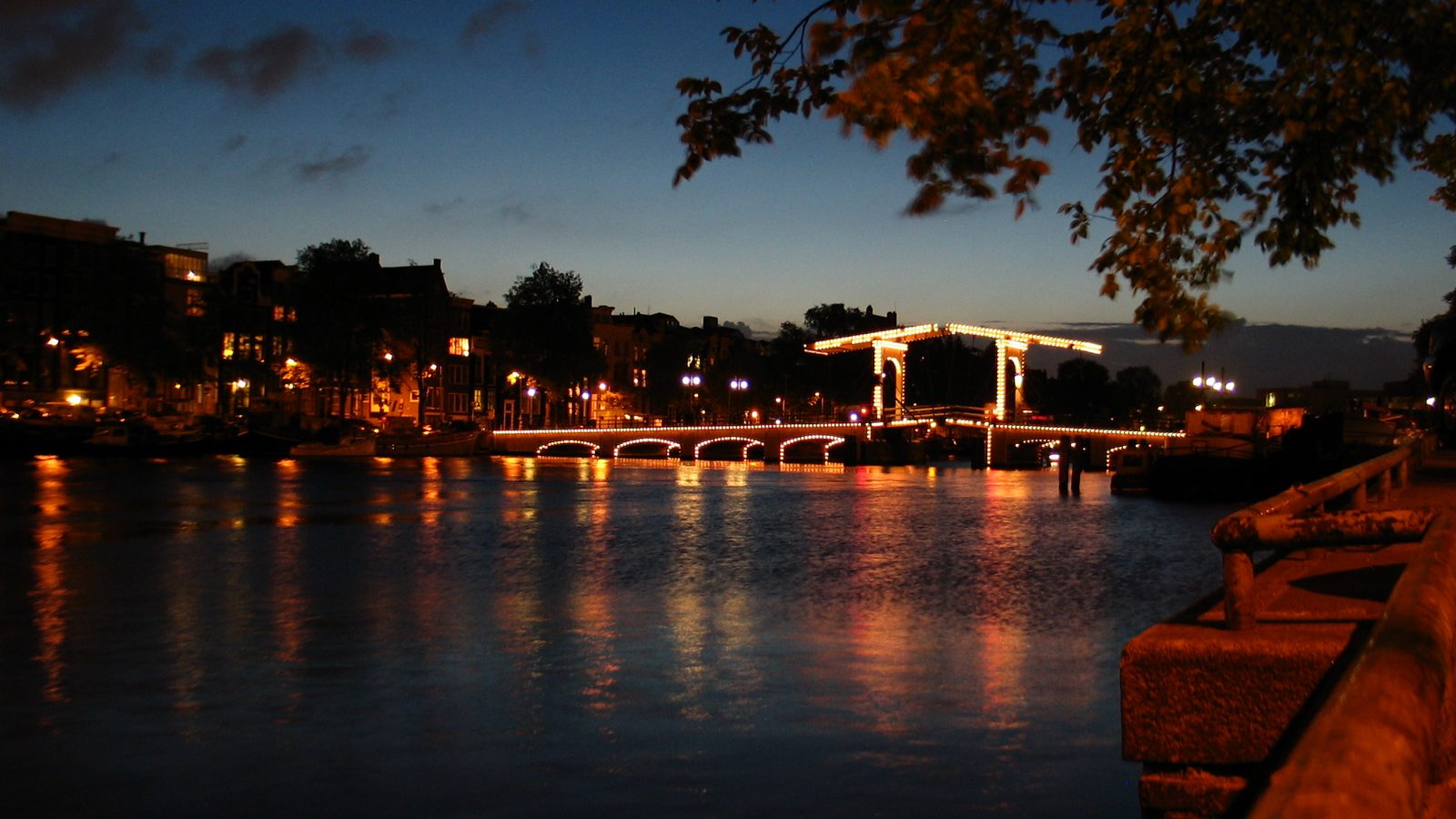
Begin readingThe bridge on Ropewalk Street was the old lifting kind, with two leaves that rose from the middle and two long counterweights that came down as they did, so that the whole thing moved like a pair of hands opening. It was the last of its sort in the city and it opened, in the evening, for exactly one boat.
Dov kept it. He had a cabin at the west end, no bigger than a wardrobe, with a stool, a heater, a window on the water, and the two levers, and he came on at nine and went home at midnight, and in between he lifted the bridge once, at about eleven, for the barge that brought sand up from the river to the yard beyond the lock. Some nights the barge was early and some nights late and some nights it did not come at all, and on those nights he sat in his cabin and watched the canal and was paid for it, which he considered fair, since somebody had to.
The canal at this hour was a black road with lights on either side of it. The houses along the west quay had their curtains drawn and a lamp showing at the edges. The trees on the east quay had lost most of their leaves and stood with their arms up, and beneath them the moored boats sat in a row with their cabin windows dark, except for one at the end, a green one, where somebody was always up. Dov did not know who. He had waved once, years ago, and been waved to, and that had settled it.
He heard the barge before he saw it. Low engine, the slap of the small wave it pushed ahead of it against the quay walls, and then the light, a single lamp on the wheelhouse, coming round the bend below the bridge at the pace of a person strolling. Dov stood up. He put on his cap, which was not required but which he liked to do, and went out onto the quay to the barrier, and swung it across the road, and hung the red lamp on it.
Two cyclists arrived at the barrier and stopped. They were young and had been going somewhere, and now they were not, and Dov watched them decide, as people always decided, that they did not mind. One of them put a foot down and leaned on the handlebars. The other got off and stood at the rail to watch. Nobody had ever complained about the bridge. There was something about watching it lift that took the hurry out of a person, and Dov had come to think that this was the most useful thing it did, more useful than letting the barge through.
He went back into the cabin and took the first lever. The bridge began to move. It did not clank or shudder; the counterweights had been balanced so long ago and so well that the two leaves rose almost silently, the road parting in the middle, the tarmac tilting up against the sky and the great iron weights coming down behind him into their pits with a sound like a slow exhale. When the leaves stood up at their full height the cyclists could see between them the water, and the lamp on the barge, and the barge itself, long and low and heaped with sand, sliding under.
The bargeman lifted one hand from the wheel as he passed beneath. Dov lifted one hand back. The wheelhouse light went under the raised leaves and out the other side and on up the canal toward the lock, growing smaller, and the small wave it pushed went along the quay walls after it and lapped once against the green boat, and the person who was always up in the green boat did not appear, but a curtain moved.
He took the second lever. The leaves came down. They met in the middle with the small, exact sound of a thing that fits, and the road was a road again, and Dov went out and lifted the barrier and took down the red lamp, and the cyclists said goodnight, and rode over the bridge that had been open a minute ago, and away up Ropewalk Street with their rear lights going. That was the boat. There would not be another tonight.
He sat in the cabin until midnight with the heater on and the window open a crack for the smell of the water. The canal went back to being a black road with lights on it. The trees held up their arms. When the church at the end of the street had done its twelve he switched off the heater and locked the cabin and walked home along the east quay, under the trees, past the row of dark boats and the green one with its light, at the pace of a person who has lifted a bridge and let it down again and has nothing more to do until tomorrow.
You do not need the screen to keep this place. Close your eyes and let it continue without us.
Let the screen go darkPhotograph: H. de Vegt, CC BY-SA 3.0, Wikimedia Commons