Mountain story · 8 minutes
The Last Hut Before the Pass
On the final evening of the season, a mountain hut is closed up slowly against the coming snow.
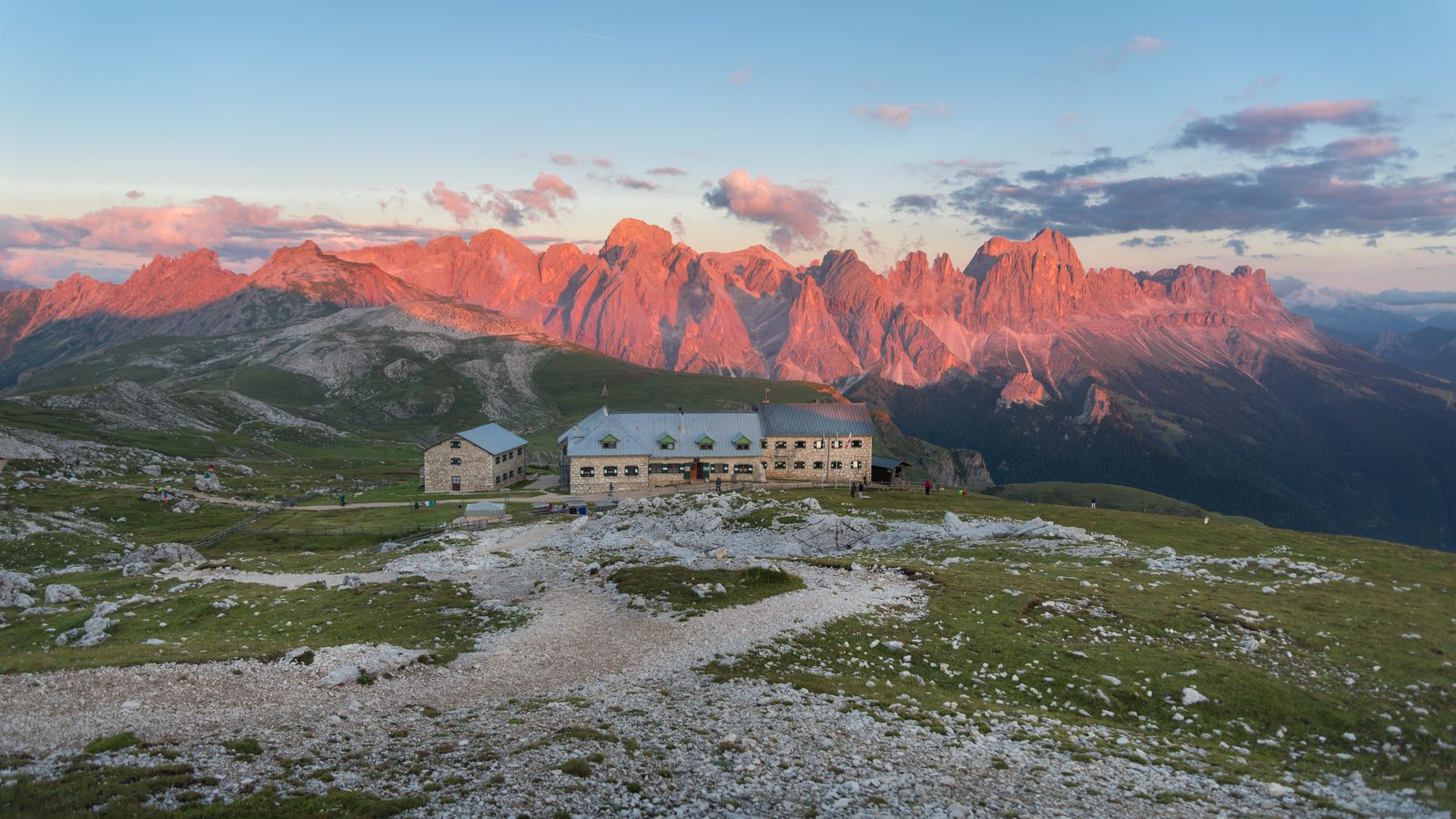
Begin readingThe hut stood at the top of the last meadow, where the path gave up being a path and became a line of cairns going on over the stones toward the pass. Sef had kept it for nine summers. Tomorrow he would walk down for the last time until spring, and tonight there were two walkers asleep in the bunk room and a great many small things to do, none of them quickly.
He had begun at four, while there was still light, with the shutters. The hut had six windows and the weather came from the west, so the three on that side had heavy wooden shutters that folded across the glass and were held with an iron bar, and he had closed them one at a time, standing on the bench to reach the top hook, and the room had gone dim and snug behind him like a room in a ship. The east windows he left open. Through them the meadow ran down grey-green to the trees, and the trees ran down to the valley, and the valley, by now, was full of shadow with a few lights in it that were the village where his bicycle was.
The water came next. A pipe ran into the hut from a spring above it, and if it were left full through the winter it would freeze and split, so on the last evening it was drained: the tap in the kitchen left open, the valve at the spring closed, the long soft gurgle of the water leaving the pipe and going back to the mountain. He filled two jugs first, for the morning. Then he stood at the sink with his hand on the cold tap and listened to the pipe empty, which took a long time and was, he had always thought, one of the loneliest and most satisfying sounds of the year.
The stove was lit. It was the last of the wood he would burn this season, and he had chosen the pieces carefully from the stack, the dry ones, the ones that would give a steady heat and not spit. The rest of the stack would stay in the lean-to under its tarpaulin through the snow, and in May, when he came up, it would be there, and the first evening’s fire would already be waiting for him. He had a cup of soup at the table by the stove. The walkers had gone up at nine, tired from the pass, and he could hear one of them breathing slowly through the wall.
The hut book lay open on the table. Every guest wrote in it: their names, where they had come from, where they were going, and sometimes a line about the weather or the view or the soup. Sef turned back through the summer. Names from a dozen countries, in pencil and biro and once in what looked like crayon, and small drawings of the peak, and a pressed flower that somebody had left in July and that he had let stay. He wrote the date and the two names from the bunk room and, after some thought, the word closing, and underlined it once. The book would go down with him in his pack and a new one would come up in the spring.
Outside, the wind had risen in the way it did before snow, not hard, but steady and from one direction, with a sound in it like a long breath taken through the teeth. He put on his coat and went out to check the lean-to and the tarpaulin and the stones on the tarpaulin, and stood a moment on the step. The sky had cleared. Above the black line of the pass the stars were out in the numbers they only ever reached up here, and the cairns went up toward them, one pale stone on the next, until he could not tell the last cairn from the first star.
There would be snow on the pass by the end of the week. It would come down the meadow after that, and cover the path and the stones and the step he was standing on, and the hut would stand in it with its shutters closed on the weather side and its windows open on the east, empty and dry and drained, keeping its wood and its new hut book and its silence until the spring. Sef had never found this sad. A hut was made to be closed as much as to be opened. The closing was part of what it was for.
He went in and shut the door and dropped the bar. The stove had settled to a red glow that lit the underside of the table and the two jugs of water and nothing else. Through the wall the walker breathed slowly on. Sef sat down by the stove with his boots off and his coat over his knees, meaning to bank the fire in a while and go up, and did not go up. The wind went on with its long breath over the roof. The last of the wood burned down without spitting. Tomorrow they would walk down through the trees to the valley, and the hut would close behind them, and in the morning light the pass would already look, from a little way off, as if it had been waiting for the snow all along.
You do not need the screen to keep this place. Close your eyes and let it continue without us.
Let the screen go darkPhotograph: Anna Marchenkova, CC BY-SA 4.0, Wikimedia Commons