Slow history · 6 minutes
The Mapmaker’s Winter Table
An unfinished map, a quiet stove, and several roads that may never need names.
From the recurring world The Gentle Trades
Begin readingIn winter, the mapmaker moved his worktable nearer the stove. The room had only one window, but the glass was broad and looked east toward low hills where snow collected in the hedges.
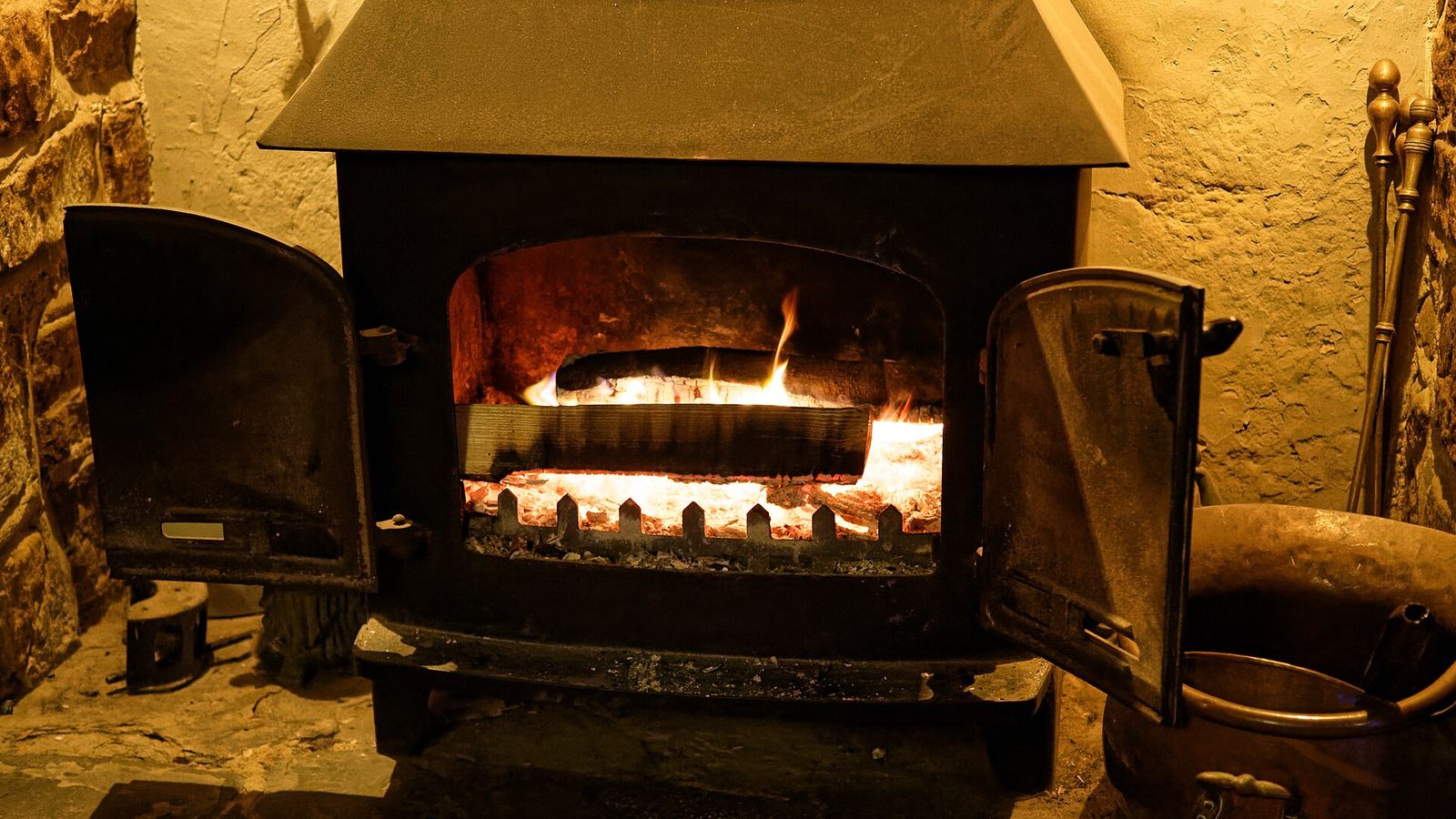
It was not a large room, and in summer the table stood beneath the window so that the light fell across the paper from the left, which was the way he had been taught. But the stove was on the far wall, and in the cold months a man could not hold a pen steady with his knuckles blue, so every year on the first hard morning he lifted the table, walked it across the boards in four short moves, and set it down where the warmth was. The move took a quarter of an hour. It marked the beginning of the slow season as surely as the first frost did, and he had come to look forward to it.
He was drawing a map of footpaths between villages. The main roads were already known. His concern was with smaller ways: the track behind the mill, the path that kept to the birch trees, the old lane used only when the meadow was dry.
He had walked most of them himself, in the autumn, with a notebook and a length of knotted cord for measuring, and had asked in every village which paths were still used and which had grown over. The answers did not always agree. The miller said the track behind the mill went to the ford; the miller’s daughter said it went to the ford only in August and to a boggy field the rest of the year. The mapmaker had written both down. A map, he believed, should be honest about the seasons.
Some paths had no official names. The mapmaker gave them temporary ones in pencil—Long Gate, Fern Corner, Two Wells—knowing these might be erased later. Pencil was good for knowledge that preferred to remain light.
He kept two pencils sharpened and one blunt, and used the blunt one for anything he was not sure of. The paths drawn with it had a softness the ink would never have, a way of fading toward their edges that seemed truthful. When he was certain of a way he went over it in ink, slowly, letting the nib rest at each bend so that the line thickened there the way a real path widens where people stop to look at the view. The kettle on the stove began to tick as it warmed. Outside, a crow crossed the window from left to right and did not come back.
At dusk he warmed soup on the stove and placed a ruler across the page to hold it flat. Snow softened the field boundaries outside until the land itself seemed to be revising his work.
He ate with the bowl in one hand and looked at the map while he ate, which his mother had told him was bad manners and his teacher had told him was the only way to learn a thing. The villages sat on the paper as small clusters of squares. Between them the paths wandered, meeting at wells and gates and the corners of woods, and where two paths met he had drawn nothing at all, because a meeting of paths needs no symbol; it explains itself. The soup was hot and tasted of leeks. The window had gone from grey to blue to a soft dark in which his lamp was reflected, floating over the snow.
He chose not to finish the western edge. There was time tomorrow to decide where the hill path bent. For tonight the unfinished line could continue beyond the paper, pale and unhurried, toward a place neither the map nor the mapmaker needed to reach.
He wiped the nib, laid the pencils side by side, and put another piece of wood into the stove so that the room would still be warm at the first hour of morning. The ruler stayed where it was, across the page, keeping the paths flat through the night. He stood at the window a while longer, looking east toward the hedges, where the snow had by now covered every boundary he had drawn, and where somewhere under it the hill path went on bending, exactly as it always had, without the slightest need of him.
You do not need the screen to keep this place. Close your eyes and let it continue without us.
Let the screen go darkPhotograph: Acabashi, CC BY-SA 4.0, Wikimedia Commons