Country journey · 5 minutes
The Road Between Two Vineyards
A country bus takes the longer road home because the bridge is being painted.
Begin readingA sign at the bridge said PAINTING and pointed the evening bus toward the old vineyard road. Nobody complained. There were five passengers, and all of them had taken this road before.
The driver slowed at the sign, read it, and turned the wheel with the resigned good humour of a man who had known since morning that the bridge was being painted and had hoped they might have finished. They had not. Two trestles and a lamp stood at the near end, and beyond them the railings were half green and half the dull grey they had been for twenty years. The bus swung away from the river and began to climb.
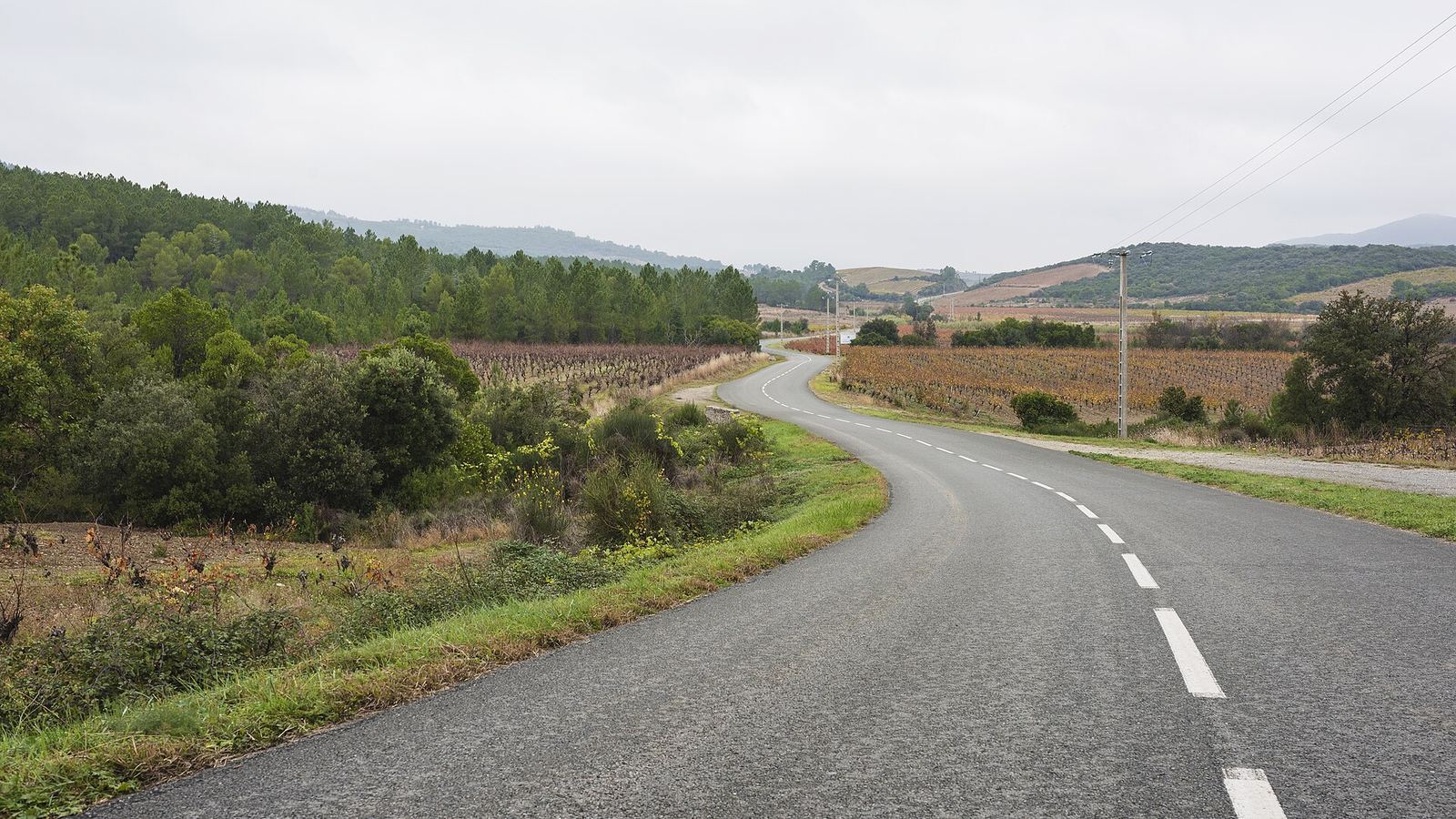
The bus climbed between low stone walls. Vines made dark, orderly lines on both sides, following the shape of the land more faithfully than any road could.
The walls were old and had moss on their northern faces and small ferns growing from the joints, and in places they had been mended with newer stone that had not yet learned to look like the rest. Above them the vines went up the slope in their rows, each row turning slightly with the hill so that from the bus window they seemed to move, slowly, like the lines on a page being read. The light had gone amber and then rose. A woman near the front took off her glasses and let the view be a blur, which was, she said to no one, the way she liked it best. The bus took the bends at the speed of the bends. Its engine had a low, settled sound on the hill, like someone humming under their breath while they worked, and the passengers, who had all heard it before, heard it again and found it good.
At the first vineyard, the driver slowed for a dog sleeping near the gate. At the second, a woman in a blue coat stepped off with a paper bag and lifted one hand before walking toward the farmhouse.
The dog did not wake. It lay in the last of the warmth on the packed earth by the gatepost with its chin on its paws, and the bus went past it at a walking pace, and the driver looked at it in the mirror afterward, as one looks back at a sleeping child. The farmhouse at the second vineyard had its shutters open and a lamp already lit in the kitchen. The woman in the blue coat did not hurry toward it. She walked between the vines with her paper bag, and the bus was around the next bend before she reached the door, so that in the memory of everyone aboard she was still walking, and would be walking for some time.
The detour added twelve minutes. By the time the bus returned to the main road, the sky had lost its last color and the windows had become mirrors. The remaining passengers sat quietly beside their reflections, carrying the extra road home with them.
Nobody looked at a watch. The twelve minutes had been full of walls and vines and a sleeping dog, and it seemed unreasonable to want them back. The bus ran down the last of the hill and the river appeared beside it again, dark now, with the bridge somewhere behind them drying its green paint in the night air. The driver switched on the inside lights, and the four faces in the windows became clearer and the country outside went away, and each of them sat with the road they had just travelled folded up inside, like a paper bag, to be carried in and set on the kitchen table when they got home.
You do not need the screen to keep this place. Close your eyes and let it continue without us.
Let the screen go darkPhotograph: Christian Ferrer, CC BY-SA 4.0, Wikimedia Commons